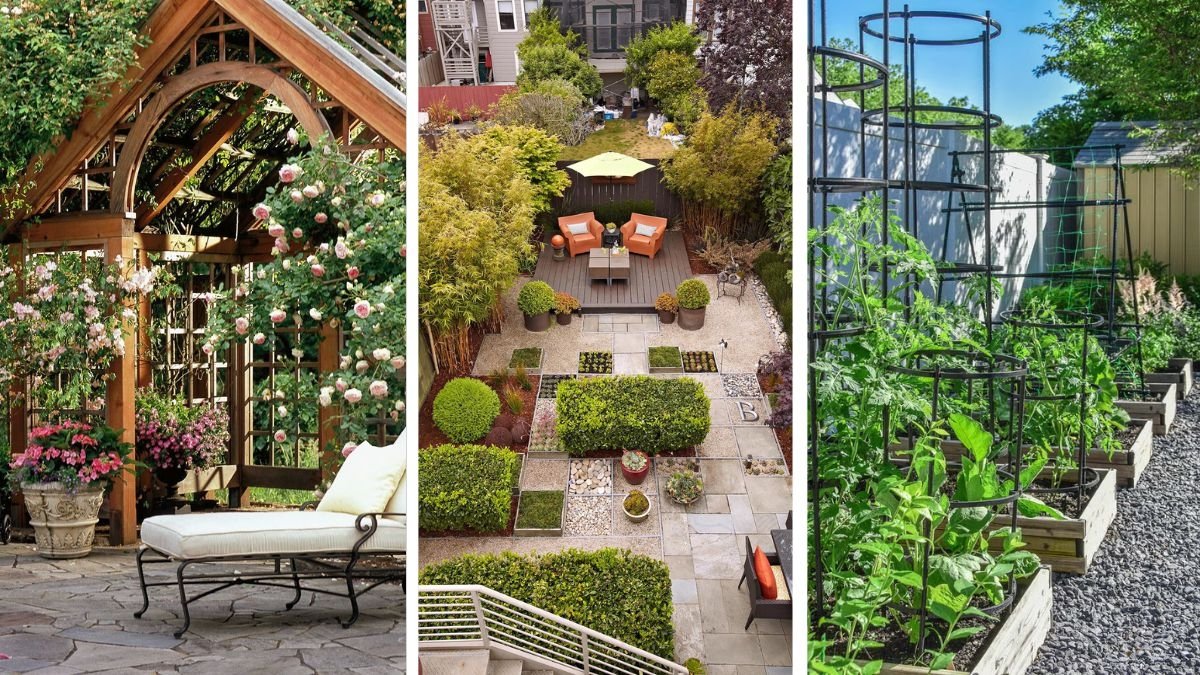
Creating a backyard garden is a wonderful way to bring beauty, food, and tranquility into your outdoor space. But if your yard is small or oddly shaped, making the most of every square foot can be a challenge. The key to a productive and attractive backyard garden lies in smart planning and space-maximizing layouts.
In this guide, we’ll explore five backyard garden layouts that help you grow more in less space, enhance aesthetics, and create an organized, efficient garden that suits your lifestyle.
1. Raised Bed Garden Layout
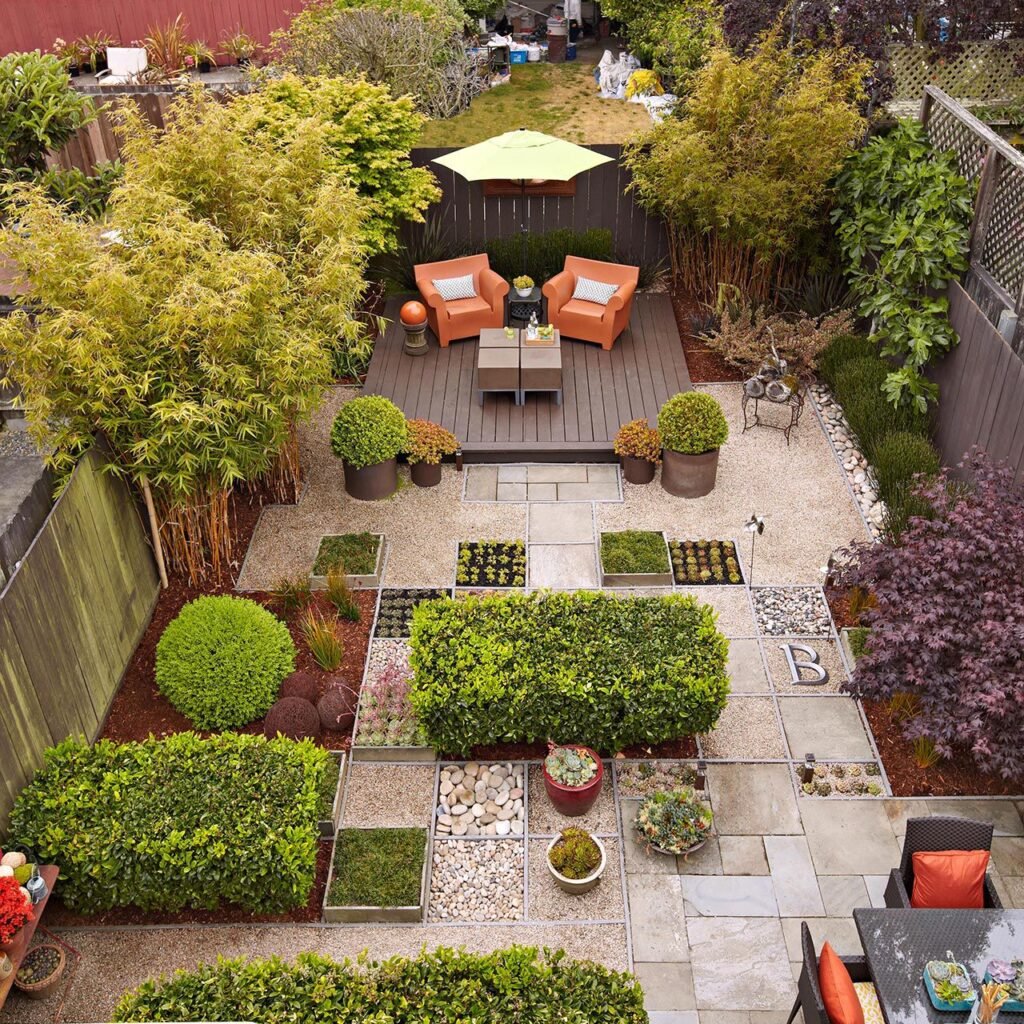
Raised beds are a classic and highly effective layout for maximizing space in your backyard garden. They allow you to grow more plants in a smaller footprint and improve soil quality.
Key Features:
- Beds are usually 3–4 feet wide and any length desired.
- Soil depth is sufficient for root vegetables, herbs, and flowers.
- Pathways between beds provide easy access without compacting soil.
Benefits:
- Better drainage and soil quality: Raised beds prevent waterlogging and are easier to amend.
- Efficient planting: You can plant densely without crowding roots.
- Easy maintenance: Less bending, weeding, and pest control is easier.
Tips for Maximum Space:
- Use square-foot gardening: Plant a grid of 1-foot squares to maximize yield.
- Stack companion plants: Plant tall crops like tomatoes with low-growing herbs beneath.
- Include vertical supports for vining plants like cucumbers or beans.
Visual Idea: Think of raised beds as mini-gardens within your garden, each with its own ecosystem.
2. Vertical Garden Layout
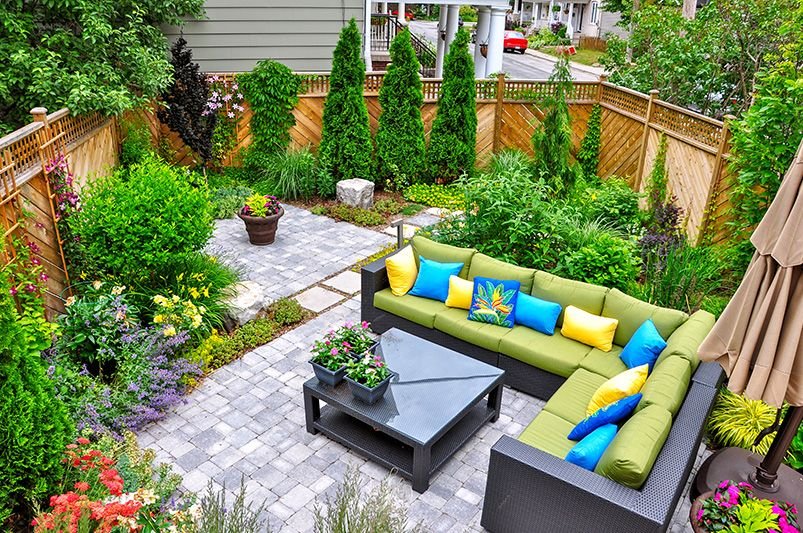
Vertical gardening is perfect for small yards or urban spaces. By using walls, trellises, and vertical planters, you can grow more without needing extra ground space.
Key Features:
- Wall-mounted planters, hanging baskets, or vertical towers.
- Trellises for climbing plants like peas, beans, or tomatoes.
- Multi-tiered shelving or pallet gardens for herbs and small vegetables.
Benefits:
- Maximizes vertical space while keeping pathways clear.
- Adds visual interest with layers and height variations.
- Improves air circulation, reducing fungal issues.
Tips for Maximum Space:
- Rotate plants to ensure sunlight reaches each layer.
- Use lightweight soil mixes in containers to reduce strain on vertical structures.
- Combine decorative plants with edible ones for a functional and aesthetic wall.
Visual Idea: Imagine a living wall with cascading herbs and vegetables that are easy to harvest and care for.
3. Raised Circle or Keyhole Garden Layout
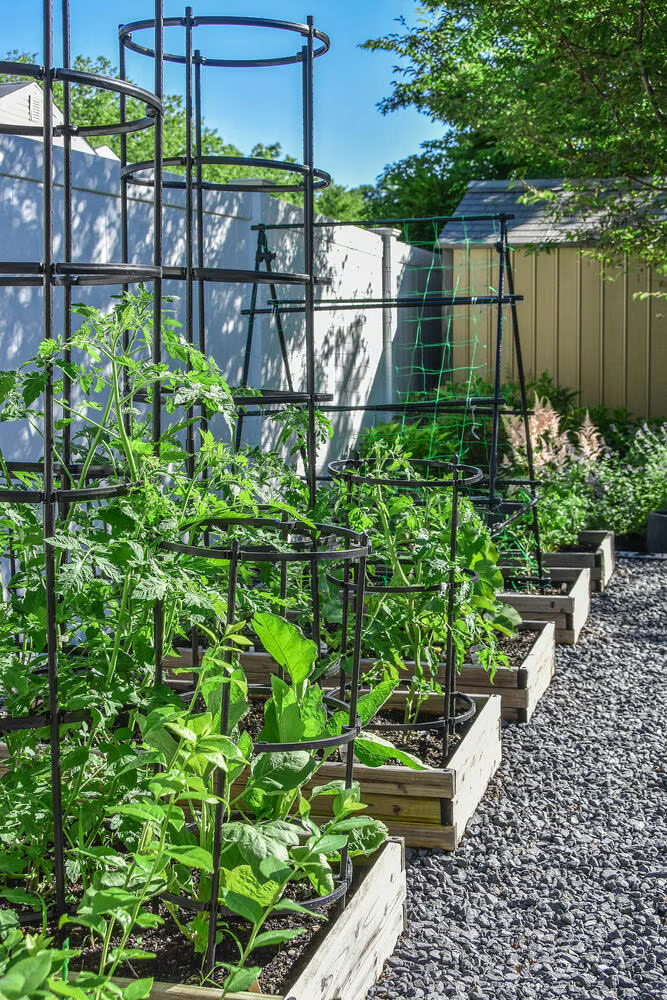
For a unique and highly efficient layout, consider a circular or keyhole garden. This layout is ideal for maximizing planting area while minimizing pathways.
Key Features:
- Plants grow in a circular pattern around a central point, such as a compost bin or small fountain.
- A keyhole path allows access to all parts of the garden without stepping on soil.
- Raised edges or mounds create better drainage.
Benefits:
- Efficient space use: Every inch is within easy reach.
- Supports diverse planting: Mix vegetables, herbs, and flowers.
- Encourages compost recycling: Central compost nourishes surrounding plants.
Tips for Maximum Space:
- Place taller plants in the center and shorter plants around the edge.
- Incorporate companion planting to boost productivity and pest resistance.
- Water efficiently with drip irrigation to reach all areas evenly.
Visual Idea: Picture a spiral or round garden that’s both decorative and productive, perfect for small backyard corners.
4. Raised Bed with Vertical Trellis Layout
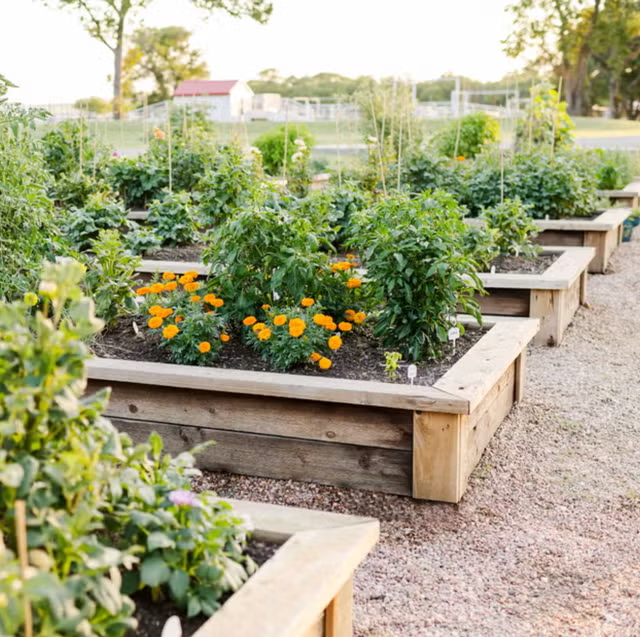
This layout combines raised beds and vertical structures for maximum output in limited space. It’s especially useful for backyard vegetable gardens.
Key Features:
- Rectangular raised beds with vertical trellises along one side.
- Climbing plants (like cucumbers, squash, or beans) grow upward, saving ground space.
- Companion plants occupy the lower bed area.
Benefits:
- Dual-level growing: Ground-level crops and vertical vines maximize planting area.
- Easy access and maintenance along one side of the bed.
- Attractive, organized layout that enhances backyard aesthetics.
Tips for Maximum Space:
- Orient trellises north-south to minimize shading of lower crops.
- Use sturdy materials like bamboo or metal for vertical supports.
- Include fast-growing leafy greens beneath slower-growing vines.
Visual Idea: Think of a layered garden with cucumbers climbing trellis towers and lettuce, carrots, or herbs thriving below.
5. Container and Portable Garden Layout
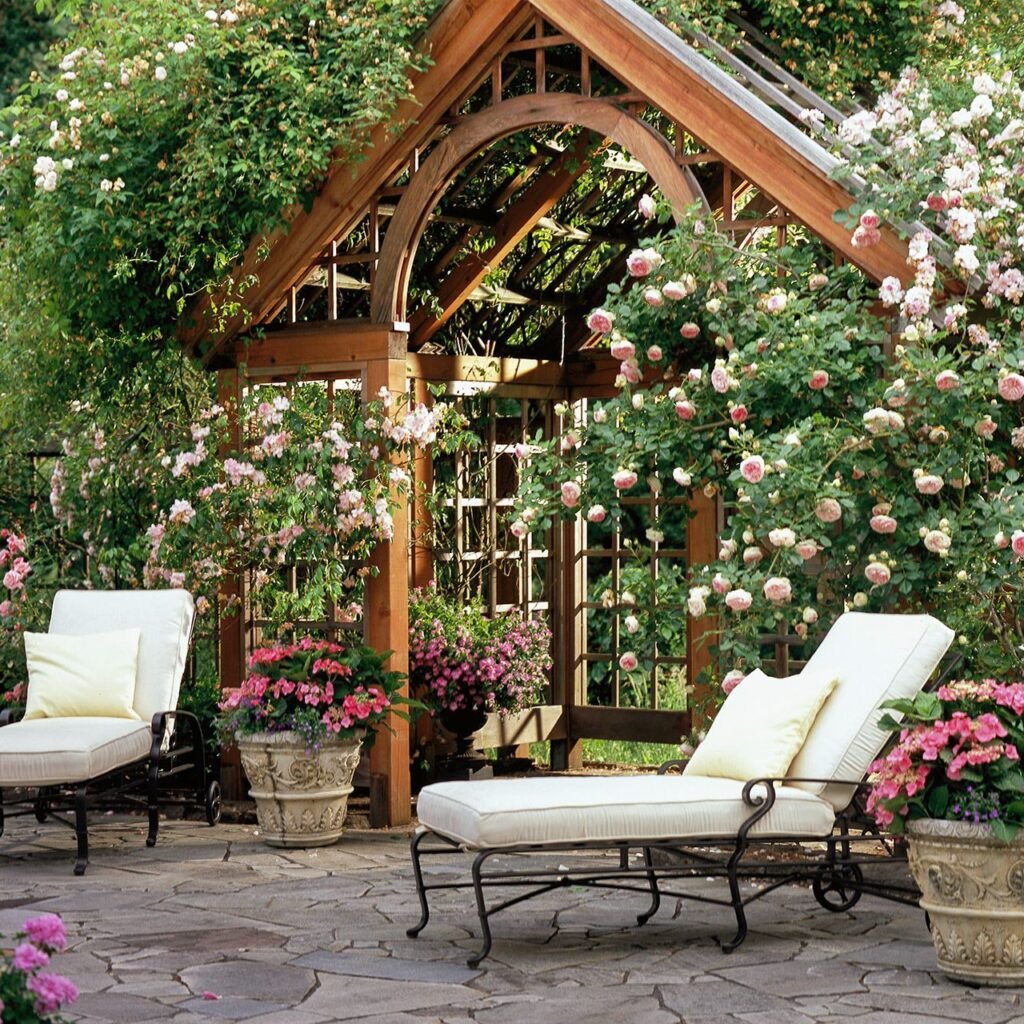
Container gardening is highly flexible and allows you to maximize space on patios, decks, or compact backyard areas. Portable containers can also be rearranged for optimal sunlight or aesthetics.
Key Features:
- Use pots, planters, or grow bags of varying sizes.
- Group containers by plant type or water requirements.
- Stack containers on shelves or pallets to create vertical layers.
Benefits:
- Ideal for small or irregularly shaped spaces.
- Easier to control soil quality and drainage.
- Can move plants indoors during harsh weather or pests outbreaks.
Tips for Maximum Space:
- Combine tall and trailing plants in the same container for layered growth.
- Choose self-watering containers to reduce maintenance.
- Rotate containers to ensure all plants receive adequate sunlight.
Visual Idea: A backyard patio filled with colorful containers, vertical planters, and hanging baskets, creating a lush, productive mini-garden.

Additional Tips to Maximize Backyard Garden Space
- Succession Planting: Replace harvested crops quickly with new seeds to keep beds productive.
- Companion Planting: Mix plants that benefit each other to save space and boost yield.
- Intercropping: Plant fast-growing crops like radishes alongside slower-growing plants like tomatoes.
- Prune Regularly: Keep plants healthy and prevent overcrowding.
- Use Pathways Wisely: Narrow, functional paths free up more planting space without limiting access.
Tip: Planning your garden on paper first helps you visualize the most efficient layout for your backyard.
Conclusion
Maximizing space in your backyard garden is all about smart planning, vertical utilization, and efficient layouts. Whether you choose:
- Raised beds,
- Vertical walls,
- Circular or keyhole gardens,
- Layered trellis layouts, or
- Portable container setups,
…each method allows you to grow more plants, improve aesthetics, and maintain a healthy garden even in limited space.
By combining these layouts with succession planting, companion planting, and careful maintenance, you can turn your backyard into a productive, beautiful, and highly functional garden.


Leave A Comment