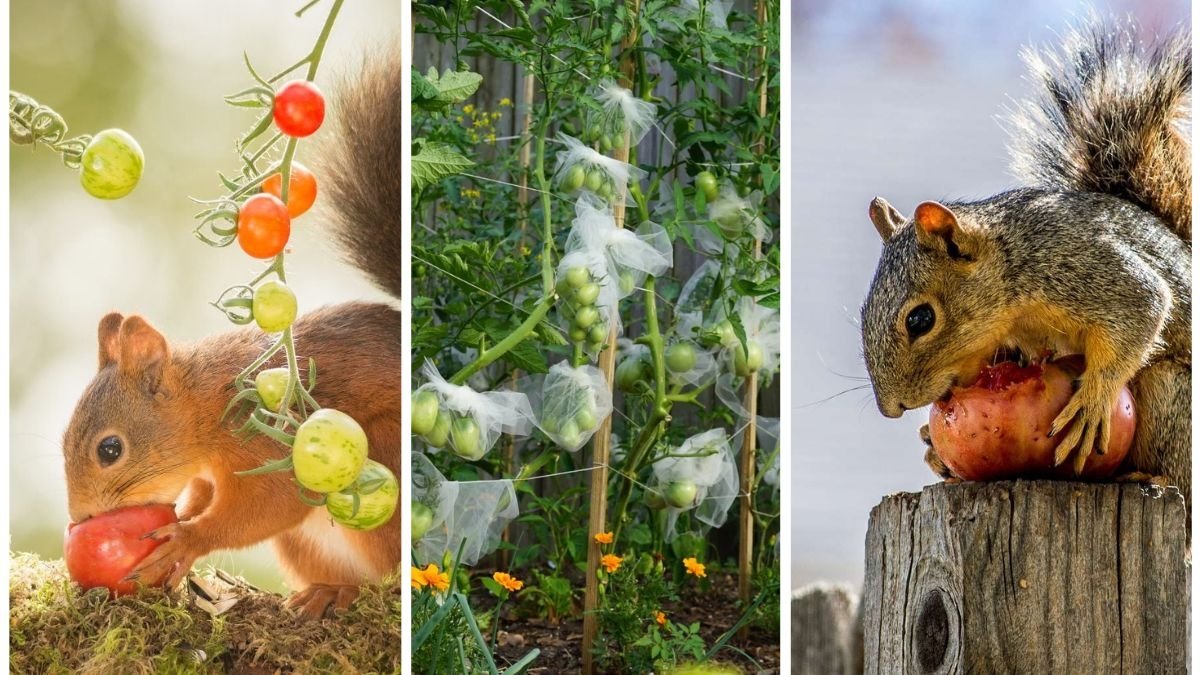
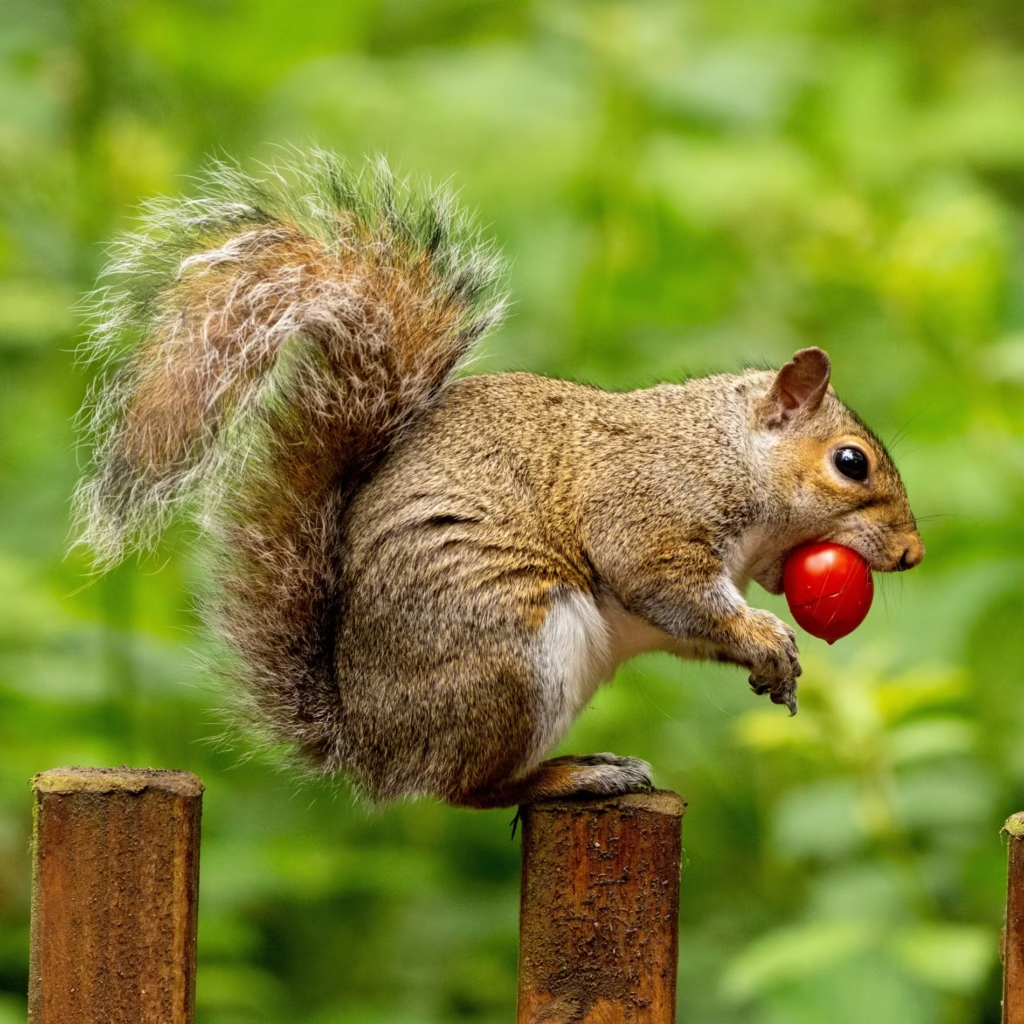
Growing homegrown tomatoes is one of the most rewarding gardening experiences. From the first blossoms to the ripe, juicy fruits, watching your tomatoes thrive is incredibly satisfying. But all that joy can quickly turn into frustration when squirrels start stealing your hard-earned tomatoes. These clever and agile rodents can wreak havoc on a garden overnight, leaving behind missing fruits, torn stems, and damaged plants.
Fortunately, there are effective strategies to protect your tomatoes while keeping squirrels safe and unharmed. In this guide, we’ll explore why squirrels target tomatoes, signs of squirrel activity, and 10 proven ways to stop them from raiding your garden.
Why Squirrels Love Tomatoes
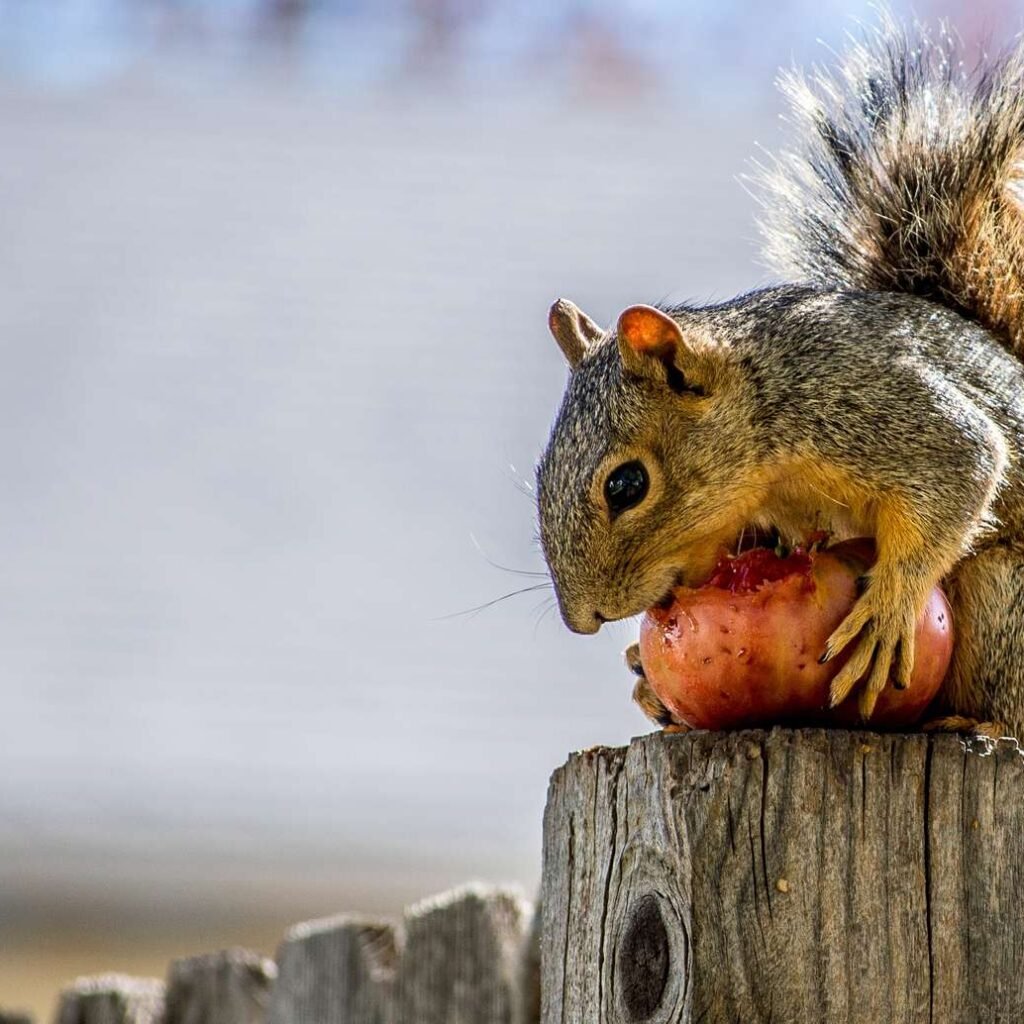
Squirrels are opportunistic feeders. While they naturally eat nuts, seeds, and fruits, tomatoes are especially appealing because they are:
- Juicy and sweet: Ripe tomatoes are full of flavor and water content.
- Easy to access: Low-hanging fruits and unprotected vines make snacking simple.
- High in energy: Squirrels store calories to stay active and prepare for colder months.
Understanding their motivations helps you anticipate and prevent damage before it occurs.
Signs of Squirrel Activity in Your Garden

Before implementing control measures, it’s essential to confirm squirrels are the culprits. Common signs include:
- Partially eaten fruits: Tomatoes may show clean bites or torn skin.
- Scattered plant debris: Stems or leaves may be damaged as squirrels climb.
- Tracks and droppings: Small footprints or oval-shaped droppings near tomato plants.
- Climbing marks: Evidence of squirrels on fences, trellises, or nearby trees.
Once you’ve confirmed squirrel activity, it’s time to take action.
1. Physical Barriers: Fences and Netting
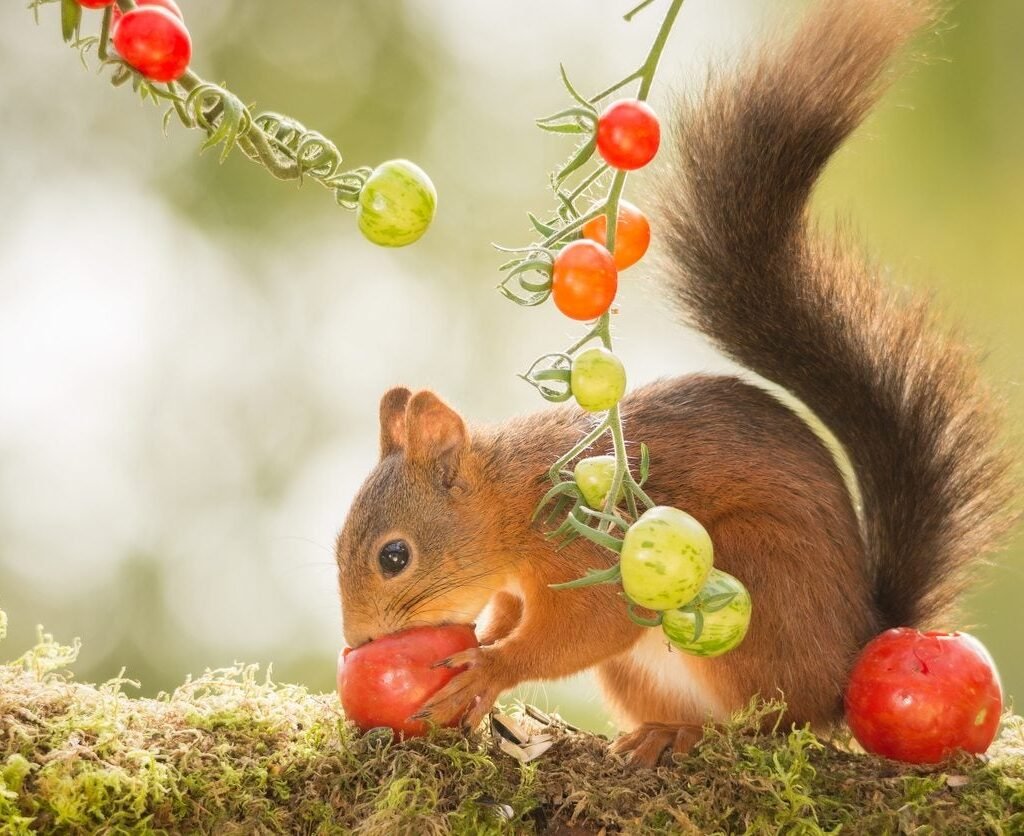
The most effective method to prevent squirrels from reaching tomatoes is physical barriers.
How to Protect Plants:
- Netting: Drape bird netting over tomato plants to create a protective cage. Secure the edges to the ground to prevent squirrels from slipping underneath.
- Wire cages: Build a frame around the plant using hardware cloth or chicken wire. Make sure the holes are small enough to keep squirrels out.
- Raised beds: Elevating tomato plants can reduce access points for squirrels.
Tip: Ensure any netting or fencing allows sunlight, airflow, and easy access for watering and harvesting.
2. Plant Deterrents and Companion Plants
Some plants naturally repel squirrels due to their scent or taste. Planting these around tomatoes can create a natural barrier.
Effective Companion Plants:
- Garlic and onions: Their strong scent deters squirrels.
- Marigolds: Their pungent odor can confuse and repel rodents.
- Hot peppers: Capsaicin in peppers can discourage squirrels from nibbling.
Tip: Sprinkle crushed hot pepper flakes around the base of tomato plants for added protection, but avoid direct contact with the fruit to prevent irritation when harvesting.
3. Homemade Repellents
Natural repellents can make your garden unappealing to squirrels without harming them.
Popular Homemade Options:
- Hot pepper spray: Blend hot peppers with water and a few drops of soap. Spray lightly on tomato leaves (not fruit) to discourage feeding.
- Garlic spray: Garlic’s strong odor repels squirrels. Mix crushed garlic with water and spray around plants.
- Vinegar solution: Mix equal parts vinegar and water to create a scent barrier around plants.
Tip: Reapply repellents after rain, as they can wash away and lose effectiveness.
4. Motion-Activated Devices
Squirrels are cautious animals and are often deterred by sudden movements or noises.
Options Include:
- Motion-activated sprinklers: A burst of water startles squirrels without causing harm.
- Motion lights or alarms: Sudden lights or sounds can scare squirrels away, especially at night.
Tip: Rotate or reposition devices occasionally, as squirrels can become accustomed to consistent patterns.
5. Strategic Harvesting
Sometimes, prevention isn’t enough. Protect your harvest by picking tomatoes at the right time.
- Harvest early: Pick tomatoes just before they fully ripen. Store indoors to prevent squirrels from accessing them.
- Use baskets or nets: If leaving fruits on the plant, use small protective nets or mesh bags to cover individual tomatoes.
Tip: Choose indeterminate varieties that produce fruit over a longer period to reduce large, vulnerable crops at once.
6. Remove Attractants
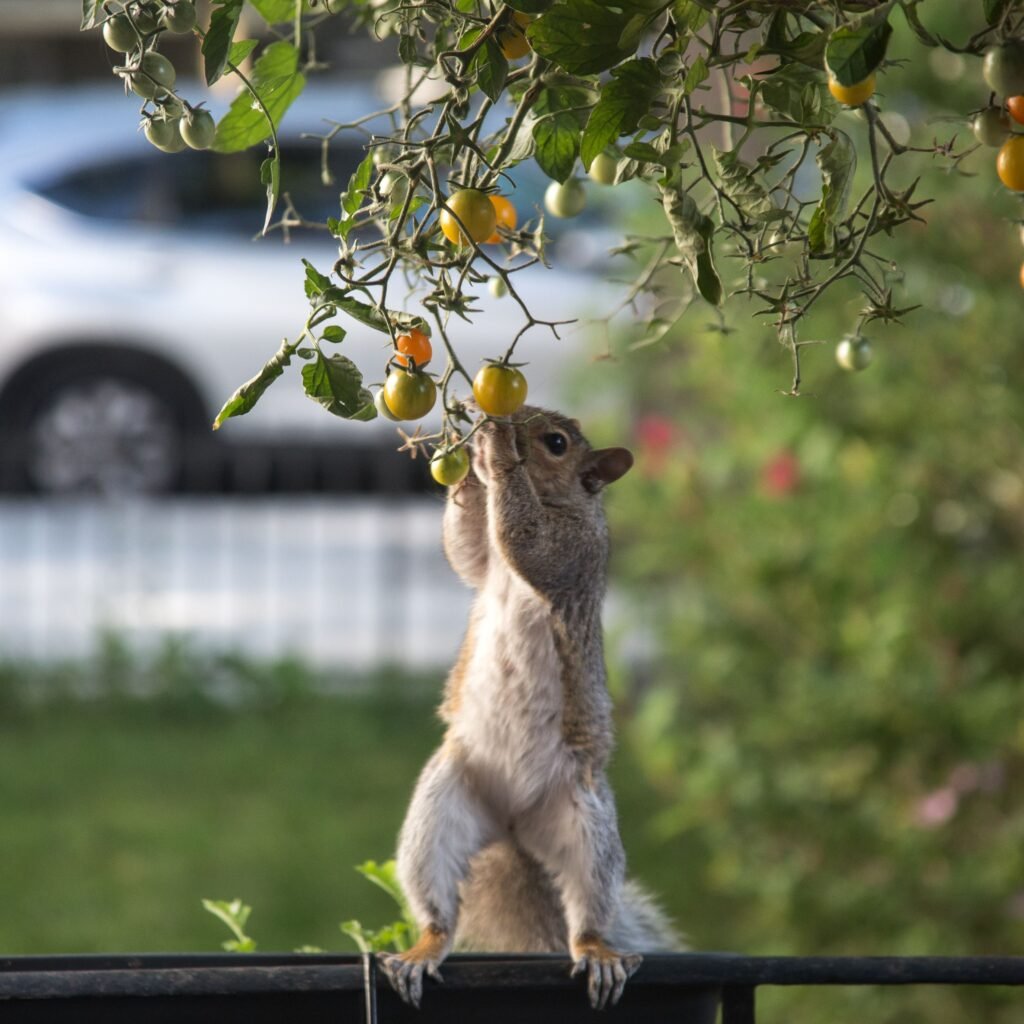
Squirrels are more likely to invade gardens where food is abundant. Reduce temptation by:
- Cleaning fallen fruits: Remove overripe or dropped tomatoes regularly.
- Securing compost: Avoid leaving compost piles accessible to squirrels.
- Storing birdseed properly: Spilled birdseed can attract squirrels, so use squirrel-proof feeders.
Tip: Keep the garden tidy—less debris and hiding spots make your garden less appealing to squirrels.

7. Encourage Natural Predators
Certain animals naturally discourage squirrels from lingering in your garden:
- Birds of prey: Hawks and owls can help reduce squirrel populations.
- Cats and dogs: Supervised outdoor pets can deter squirrels effectively.
Tip: Install bird perches or nest boxes near your garden to encourage natural predators while adding biodiversity.
8. Use Decoy Plants
Decoy plants can distract squirrels away from your valuable tomatoes:
- Corn, sunflowers, or berry bushes: Plant these as sacrificial crops to divert attention from tomatoes.
- Rotate decoys: Change locations to maintain effectiveness.
Tip: Decoy plants should be placed strategically around the garden perimeter, not directly with tomato plants.
9. Ultrasonic Repellents
Ultrasonic devices emit high-frequency sounds that squirrels find irritating but are usually inaudible to humans.
- Place near tomato plants: Ensure coverage of the affected area.
- Adjust placement regularly: Squirrels may become accustomed to a fixed sound.
Tip: Combine ultrasonic devices with other deterrents for best results.

10. Trapping (Where Legal and Humane)
In areas where legal, live trapping can remove persistent squirrels without harm.
- Use live cage traps: Bait with fruits or nuts.
- Check traps frequently: Minimize stress to the animal.
- Relocate responsibly: Move squirrels far enough to prevent return, following local regulations.
Tip: Trapping is most effective when combined with other preventative methods.
Additional Tips for a Squirrel-Free Tomato Garden
- Prune vines strategically: Remove lower leaves that squirrels can use for climbing.
- Install vertical supports: Sturdy cages or trellises reduce climbing opportunities.
- Rotate crops: Plant tomatoes in different areas each year to confuse wildlife.
- Observe activity patterns: Squirrels are most active in early morning and evening—take preventive measures during these times.
Conclusion
Squirrels may be clever and persistent, but protecting your tomatoes is possible with a combination of physical barriers, repellents, natural deterrents, and smart gardening practices.
- Use netting, fencing, and cages to create physical protection.
- Repel squirrels with natural sprays, companion plants, and decoy crops.
- Encourage predators and maintain a clean garden environment to reduce attractiveness.
- Harvest strategically to protect ripening fruits.
By understanding squirrel behavior and using multiple strategies together, you can enjoy a bountiful tomato harvest without losing your fruits to these persistent visitors.

Leave A Comment