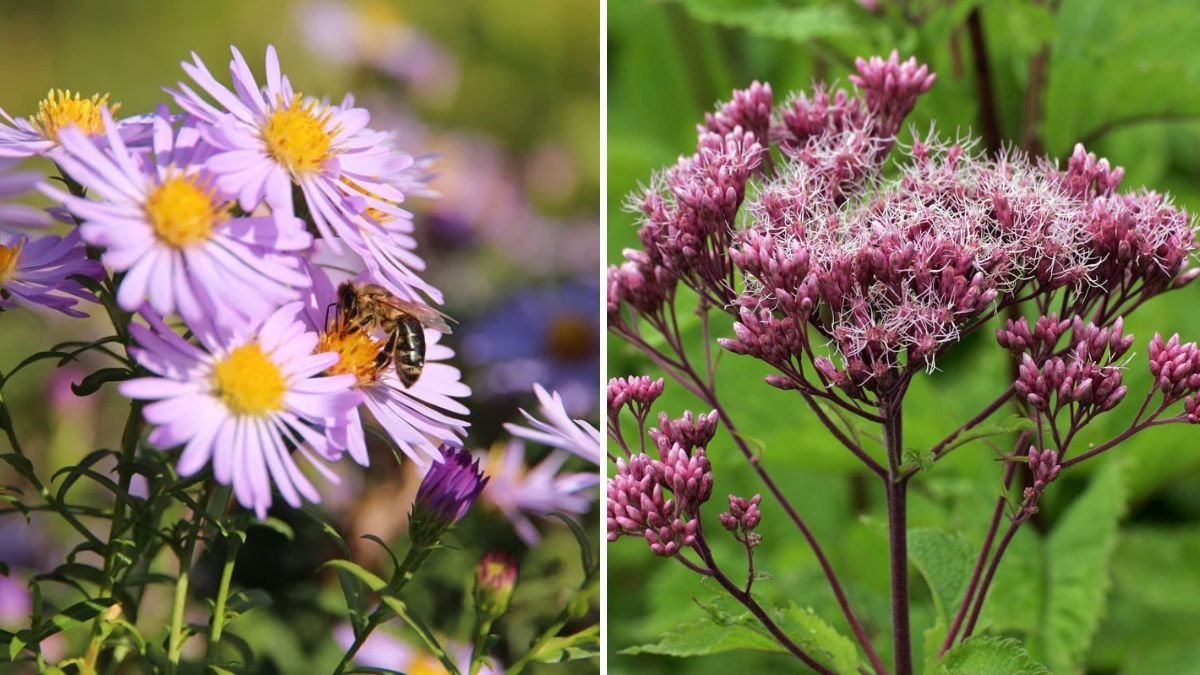
When most people think about pollinator-friendly flowers, their minds usually jump to spring and summer gardens filled with buzzing bees, fluttering butterflies, and darting hummingbirds. However, autumn gardens can be just as vital for these creatures. As the days shorten and temperatures cool, pollinators need a reliable food source to fuel their migration journeys or prepare for winter hibernation.
Planting fall-blooming flowers that attract pollinators ensures that your garden not only stays colorful well into the season but also provides essential nectar and pollen at a time when resources are dwindling. Below, we’ll explore five autumn flowers that are irresistible to pollinators and provide practical tips on how to grow and care for them.
1. Asters (Symphyotrichum spp.)
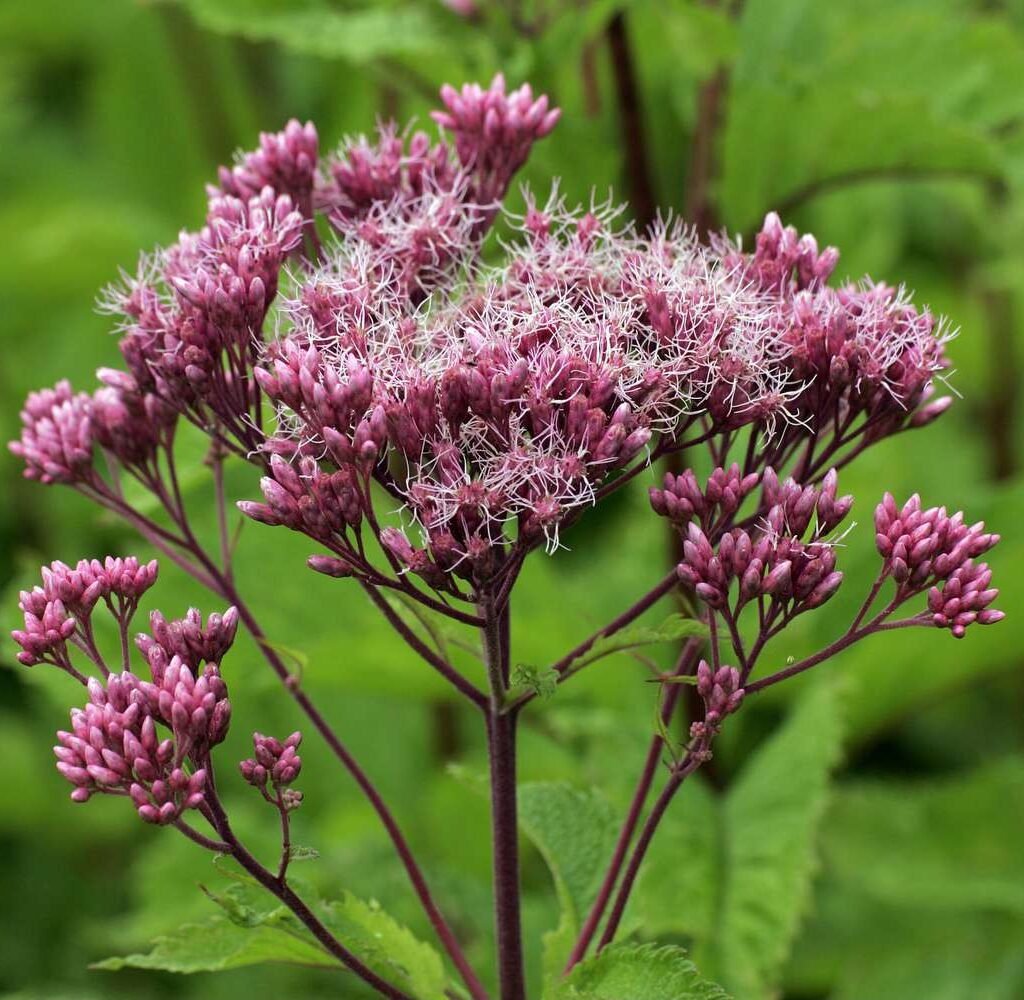
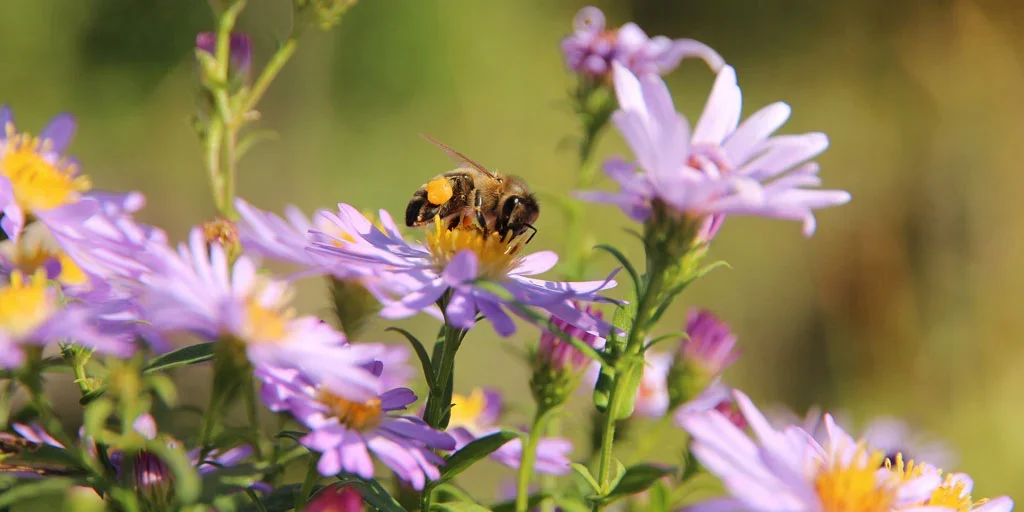
Few flowers embody autumn’s beauty like asters. With their daisy-like blooms in shades of purple, blue, pink, and white, asters are a magnet for bees, butterflies, and late-season hoverflies.
Why Pollinators Love Them
- Nectar-rich blooms: Asters produce abundant nectar when many other plants have stopped flowering.
- Butterfly favorite: Monarch butterflies rely heavily on asters during their fall migration.
- Bee buffet: Both native bees and honeybees flock to asters in large numbers.
How to Grow Asters
- Sunlight: Full sun to partial shade.
- Soil: Well-draining soil, though asters adapt well to various soil types.
- Planting tips: Space plants 1–3 feet apart to encourage airflow and prevent powdery mildew.
- Maintenance: Deadhead spent blooms to prolong flowering; divide clumps every 2–3 years.
Asters not only feed pollinators but also add striking late-season color, especially when paired with ornamental grasses.
2. Goldenrod (Solidago spp.)
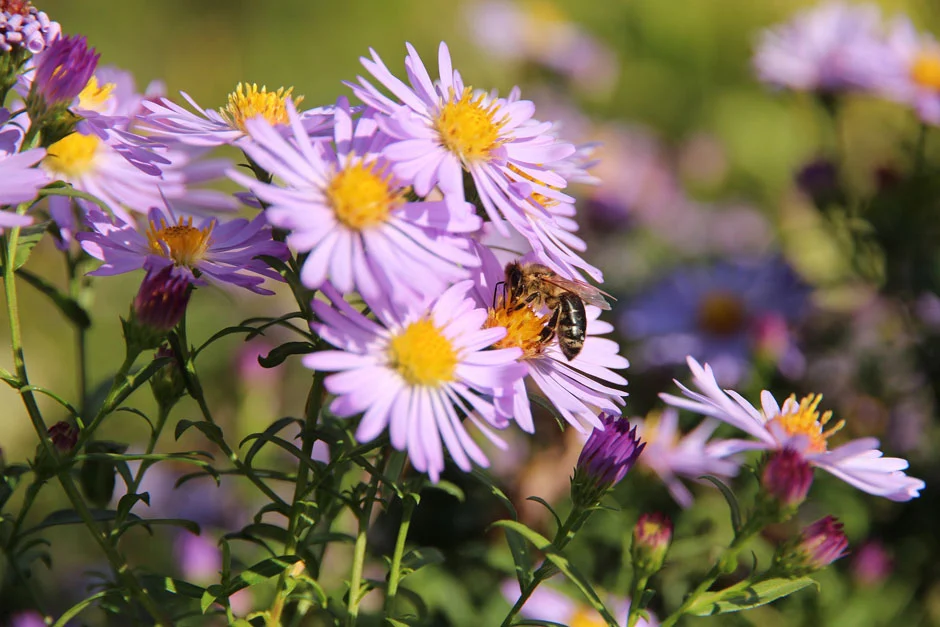
Goldenrod often gets unfairly blamed for autumn allergies, but ragweed is the real culprit. Far from being a nuisance, goldenrod is a powerhouse pollinator plant that bursts into golden-yellow plumes from late summer through fall.
Why Pollinators Love Them
- Pollinator diversity: Supports over 100 species of butterflies and moths.
- Nectar powerhouse: Provides fuel for migrating monarchs and late-season bees.
- Specialist bees: Some native bees rely exclusively on goldenrod pollen.
How to Grow Goldenrod
- Sunlight: Prefers full sun.
- Soil: Thrives in dry to average soils.
- Planting tips: Plant in drifts for the most visual impact and to create a pollinator hub.
- Maintenance: Most varieties are low-maintenance, though some taller species may need staking.
Goldenrod is an essential plant for biodiversity, offering a lifeline for pollinators when other flowers fade.
3. Sedum (Hylotelephium spectabile, commonly known as “Autumn Joy”)
Sedum, especially the variety ‘Autumn Joy,’ is one of the best fall-blooming succulents. Its clusters of star-shaped flowers open in late summer and deepen in color from pale pink to rich burgundy as the season progresses.
Why Pollinators Love Them
- Bees galore: Sedum blooms teem with honeybees, bumblebees, and solitary bees.
- Butterfly attractor: Many butterfly species feast on sedum nectar.
- Extended bloom time: Provides weeks of forage well into fall.
How to Grow Sedum
- Sunlight: Full sun for best flowering.
- Soil: Well-drained soil; drought-tolerant once established.
- Planting tips: Perfect for rock gardens, borders, or containers.
- Maintenance: Minimal care needed—cut back in late winter or early spring.
Sedum is both beautiful and practical: it thrives in challenging conditions and continues to nourish pollinators late into the season.
4. Joe-Pye Weed (Eutrochium purpureum)
A towering perennial that can reach 4–7 feet tall, Joe-Pye weed is a stunning addition to the fall pollinator garden. Its mauve-pink flower clusters bloom from late summer through early fall and are irresistible to butterflies.
Why Pollinators Love Them
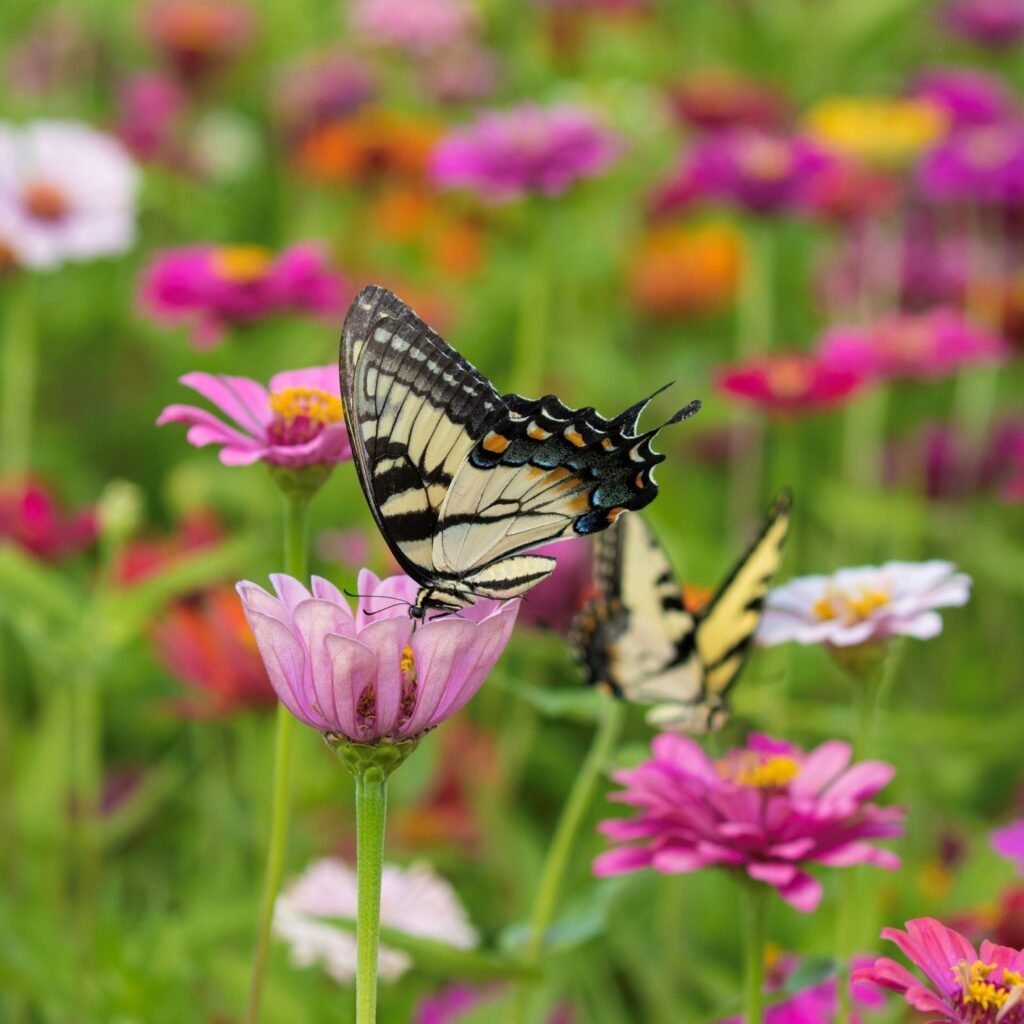
- Butterfly magnet: Swallowtails, monarchs, and painted ladies flock to its blooms.
- Nectar-rich: Provides food for bees, moths, and even hummingbirds.
- Tall stature: Creates a natural feeding station that attracts pollinators from a distance.
How to Grow Joe-Pye Weed
- Sunlight: Prefers full sun but tolerates partial shade.
- Soil: Moist, rich soil is ideal, though it adapts to average garden soil.
- Planting tips: Excellent for the back of borders or naturalized areas.
- Maintenance: Keep soil consistently moist; cut back stems in late winter.
Joe-Pye weed adds height and drama to fall gardens while supporting a wide array of pollinators.
5. Chrysanthemums (Chrysanthemum spp.)
No flower is more synonymous with autumn than chrysanthemums, or “mums.” While many hybrids are bred for looks rather than nectar, certain garden varieties are still valuable to pollinators.
Why Pollinators Love Them
- Extended bloom: Chrysanthemums often flower late into autumn, bridging a food gap.
- Bee-friendly varieties: Open-petaled types, such as daisy-like mums, are easier for pollinators to access.
- Color diversity: Bright hues of red, orange, yellow, and pink attract foraging insects.
How to Grow Chrysanthemums
- Sunlight: Full sun is best.
- Soil: Well-draining, fertile soil.
- Planting tips: Plant in spring for strong roots; space well to prevent disease.
- Maintenance: Pinch back stems in early summer for bushier growth and more blooms.
With the right selection, chrysanthemums can keep your garden buzzing with activity even into the first frosts.
Tips for Creating a Pollinator-Friendly Autumn Garden
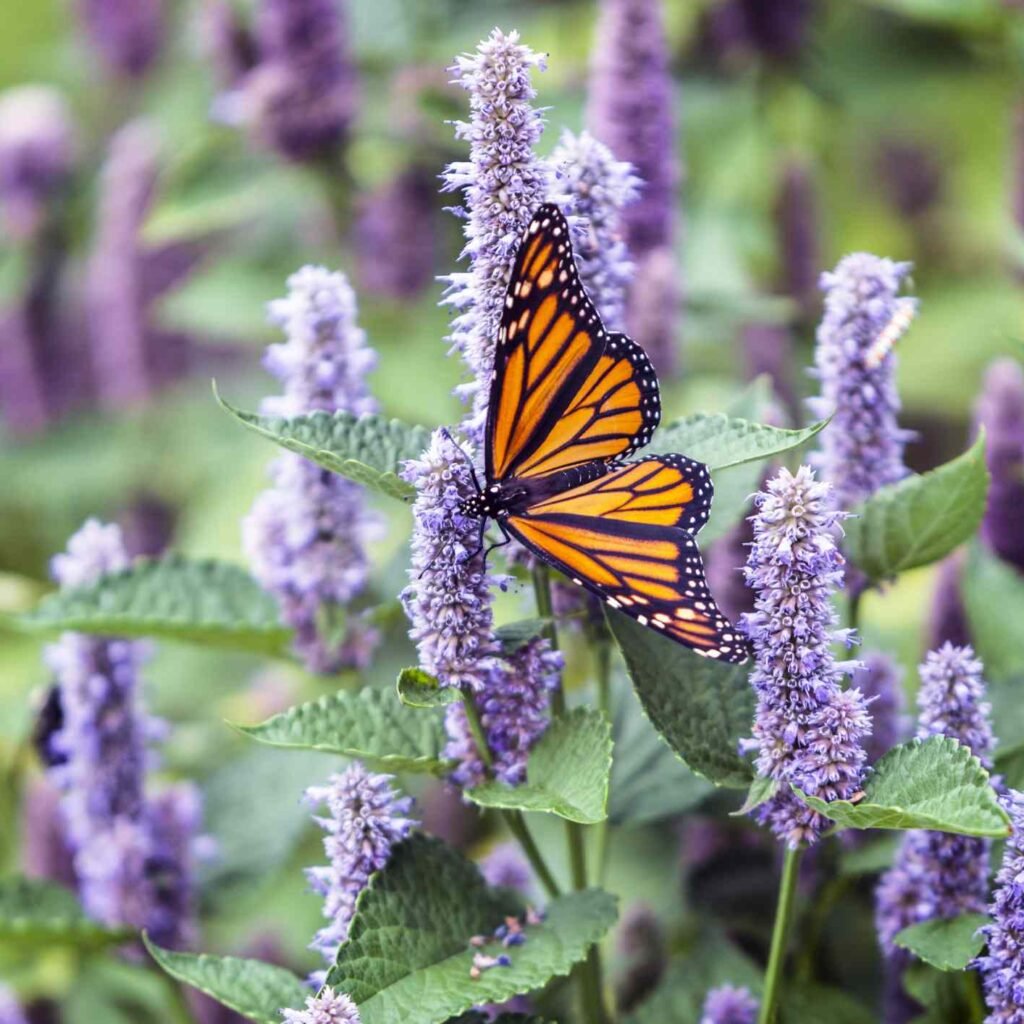
Adding these five flowers is just the beginning. To make your fall garden a true pollinator haven, consider these additional strategies:
- Plant in clusters: Large groupings of flowers make it easier for pollinators to find food.
- Choose diverse bloom shapes: Different pollinators prefer different flower types; variety ensures all needs are met.
- Avoid pesticides: Even “natural” sprays can harm bees and butterflies. Instead, rely on organic or integrated pest management methods.
- Leave some wild areas: Allow native plants, grasses, and seed heads to remain for overwintering insects.
- Provide water sources: Shallow dishes with pebbles or birdbaths can keep pollinators hydrated.
By combining thoughtful plant selection with pollinator-friendly practices, you’ll extend both your garden’s beauty and its ecological value well into autumn.
Final Thoughts
Autumn doesn’t have to mark the end of a pollinator’s paradise. With flowers like asters, goldenrod, sedum, Joe-Pye weed, and chrysanthemums, you can create a vibrant, buzzing garden that supports pollinators during one of the most critical times of year.
These fall bloomers not only offer essential nectar and pollen but also infuse your landscape with rich seasonal color. By planting them, you’re not just beautifying your outdoor space—you’re playing an important role in sustaining pollinator populations that ensure the health of ecosystems and future harvests.
So, as you plan your fall garden, remember: what blooms in autumn feeds the future.

Leave A Comment