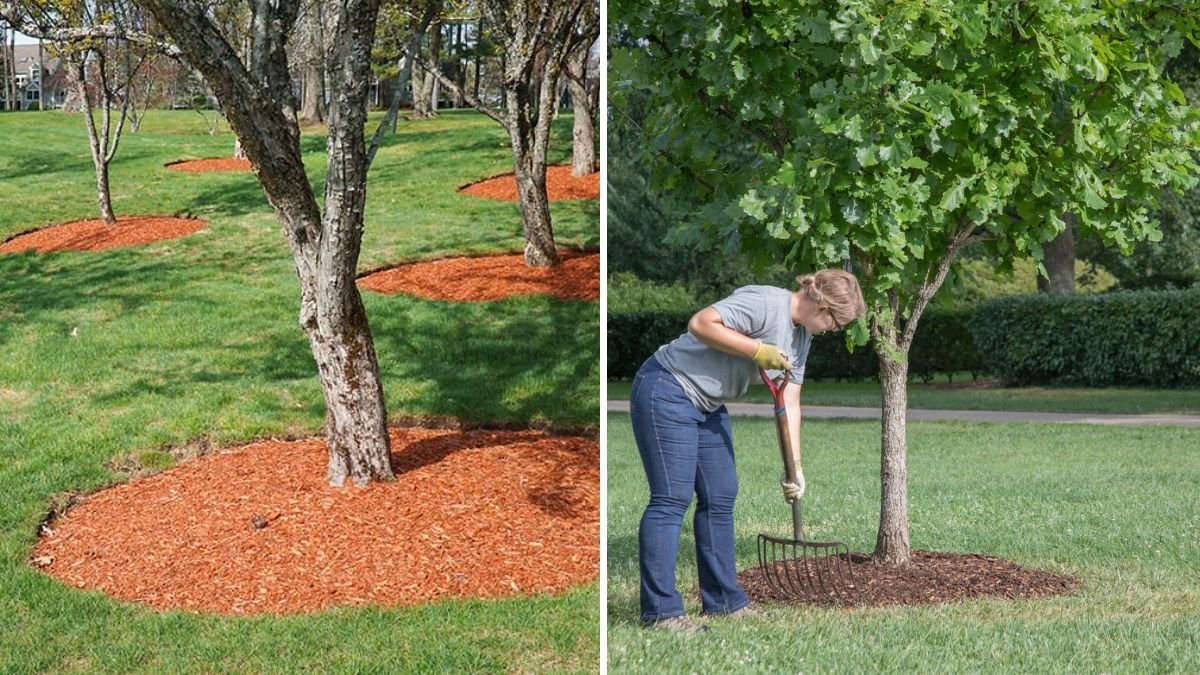
Mulching is one of the simplest and most effective ways to protect trees, conserve soil moisture, improve health, and enhance landscape aesthetics. Yet, despite its apparent simplicity, improper mulching can do more harm than good. Applying mulch correctly is a crucial horticultural skill for anyone who wants trees to thrive.
In this article, we’ll explore why mulching is important, the benefits it provides, the best materials to use, proper application techniques, common mistakes to avoid, and seasonal considerations for maximum protection.
Why Mulching Matters
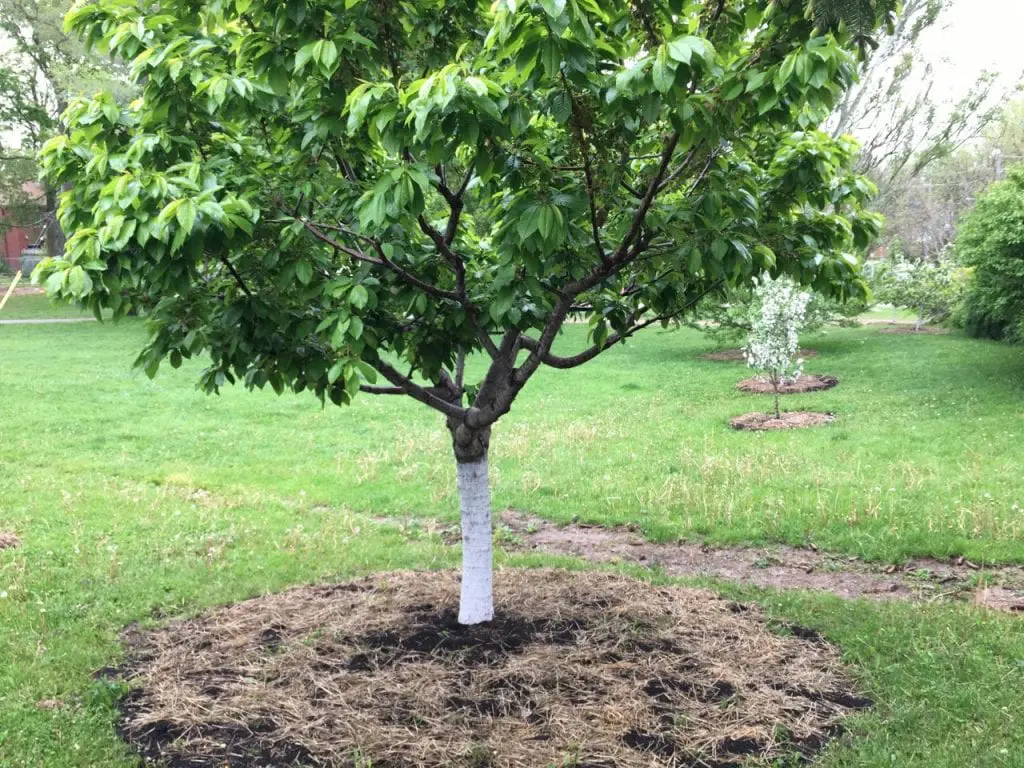
Mulch is a protective layer placed around the base of trees. Its primary purpose is to create an environment that supports root growth and overall tree health. Trees face a variety of environmental challenges, such as:
- Fluctuating temperatures
- Soil erosion
- Water stress
- Weed competition
- Pests and disease
Mulching addresses all of these challenges. For young trees, it is especially important because their roots are still developing, and their bark is more vulnerable to environmental stresses. Even mature trees benefit from mulch, which enhances soil structure and provides long-term protection.
Benefits of Mulching
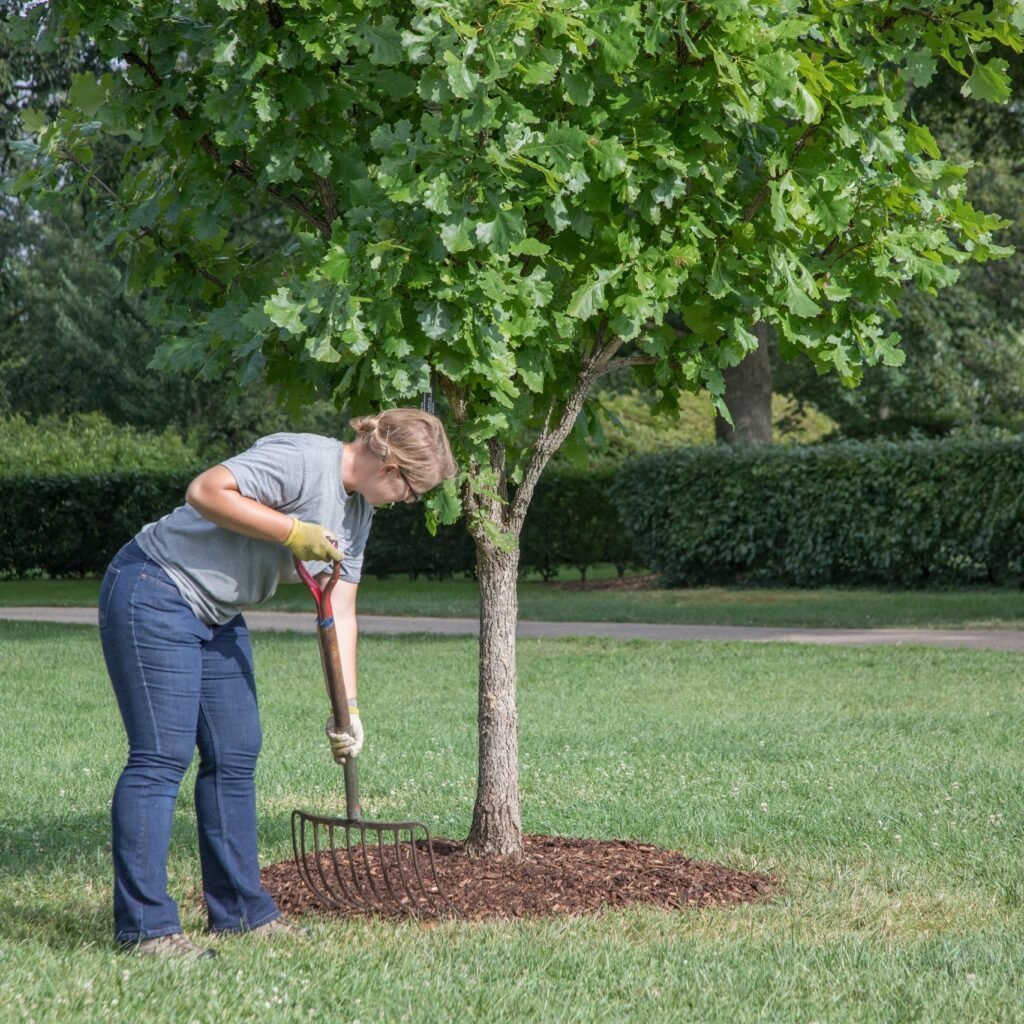
Mulching offers numerous advantages:

1. Moisture Retention
A thick layer of mulch helps soil retain moisture, reducing the frequency of watering. During hot summers or dry autumns, mulch acts as a sponge, keeping roots hydrated and reducing stress on the tree.
2. Temperature Regulation
Mulch insulates soil, keeping roots cooler in summer and warmer in winter. This buffering effect helps prevent root damage from sudden temperature fluctuations.
3. Weed Suppression
By blocking sunlight, mulch reduces weed growth around the tree base. This means less competition for nutrients and water, allowing the tree to thrive.
4. Soil Improvement
Organic mulches decompose over time, adding valuable nutrients and improving soil structure. This encourages healthy root development and increases microbial activity.
5. Protection Against Mechanical Damage
Mulch acts as a barrier against lawnmowers and string trimmers, preventing injuries to tree trunks that can invite pests and disease.

Choosing the Right Mulch
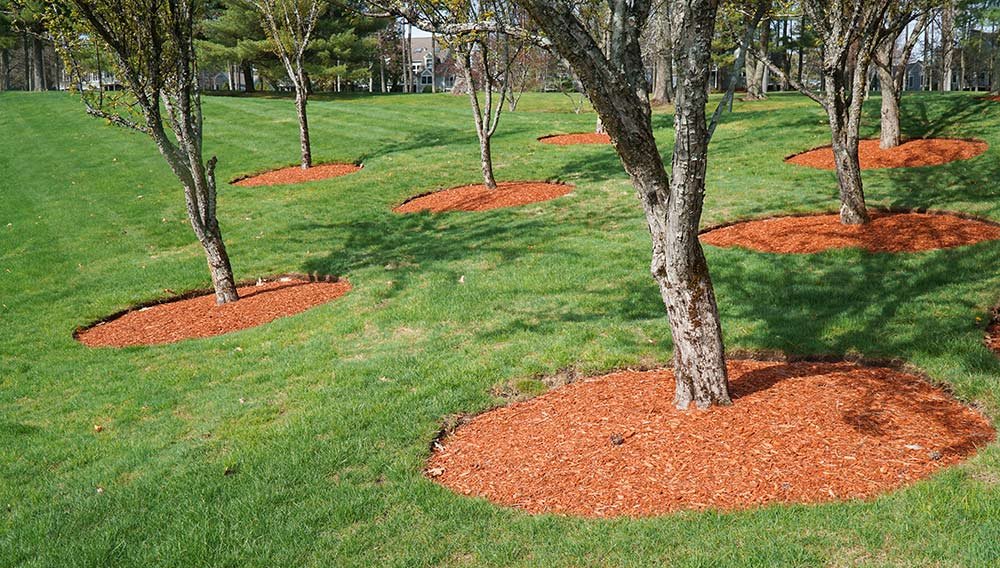
Selecting the right type of mulch is critical for achieving maximum protection. Mulches are broadly categorized into organic and inorganic options.
1. Organic Mulches
These decompose over time, enriching the soil:
- Wood Chips/Bark: Long-lasting, attractive, and excellent for moisture retention.
- Compost: Provides nutrients but breaks down quickly; best used with other mulch types.
- Shredded Leaves: Readily available and nutrient-rich.
- Straw or Pine Needles: Light, quick to apply, and effective for moisture retention.
Pros: Improves soil, supports beneficial microorganisms, and looks natural.
Cons: Requires replenishment over time as it decomposes.
2. Inorganic Mulches
These do not decompose:
- Gravel or Stones: Provide good drainage and long-lasting coverage.
- Rubber Mulch: Resistant to decomposition and weeds but does not improve soil.
Pros: Long-lasting, low maintenance.
Cons: Does not add nutrients and can heat soil excessively in summer.

Tip: For most home gardens, organic mulch is recommended for overall tree health and soil enrichment.
How to Apply Mulch Properly
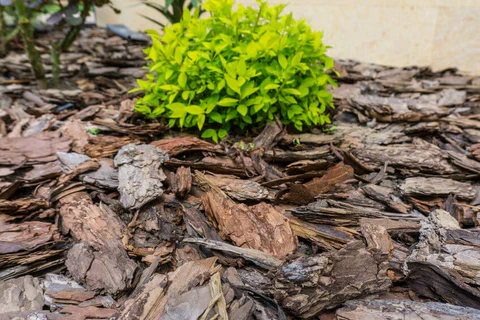
Proper application is critical to avoid problems like root rot or trunk disease. Follow these steps for maximum protection:
1. Prepare the Area
- Remove grass, weeds, and debris from around the tree base.
- Loosen compacted soil to encourage root expansion.
2. Apply the Mulch Layer
- Thickness: 2–4 inches is ideal. Too thin offers little benefit; too thick can suffocate roots.
- Radius: Extend mulch 3–4 feet from the trunk or beyond the tree’s drip line if possible. This ensures that roots benefit fully.
3. Keep Mulch Away from the Trunk
- Avoid piling mulch directly against the trunk. Leave a 2–3 inch gap around the base.
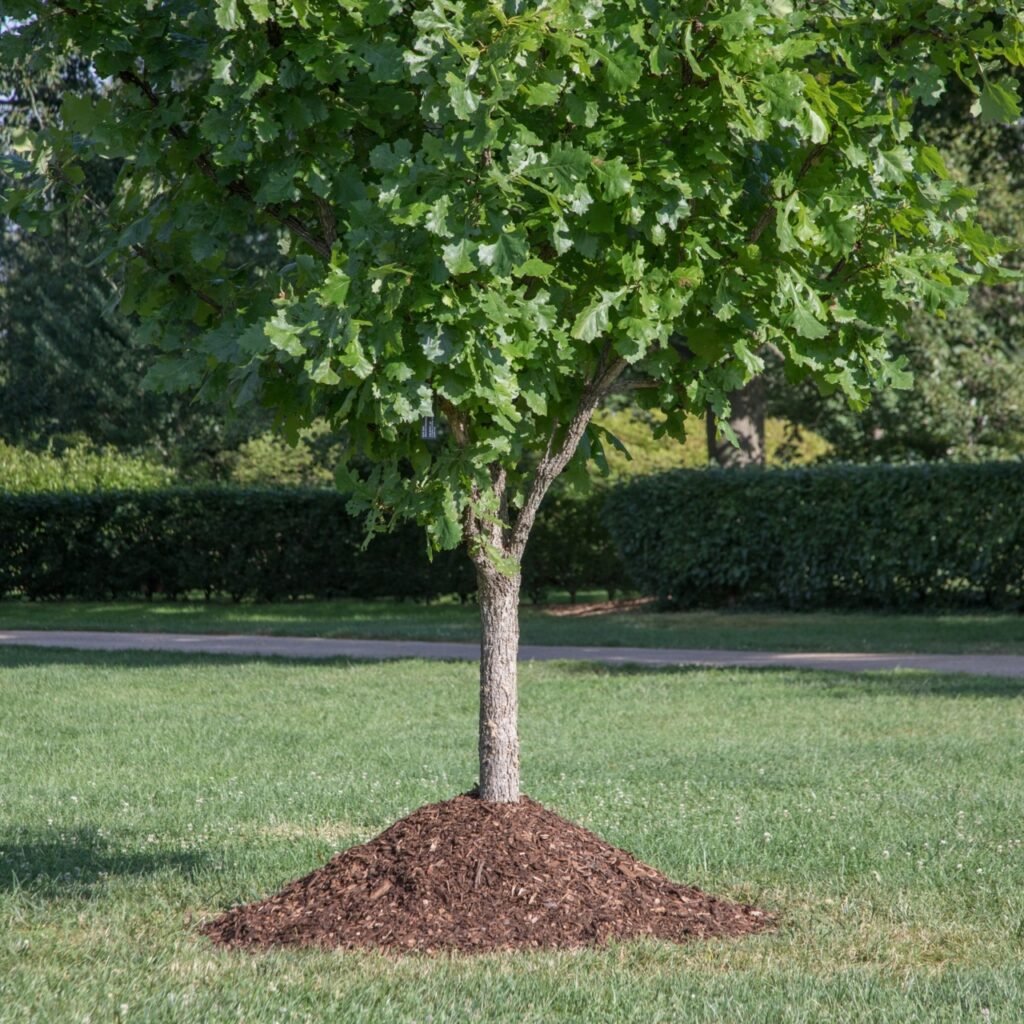
- Why: Mulch touching the trunk can trap moisture, leading to bark decay, fungal infection, or pest infestation—a condition often called “volcano mulching.”
4. Shape the Mulch
- Create a gentle, sloping mound or saucer shape, with the highest point at the edge of the mulch ring.
- This directs water toward the roots while preventing accumulation against the trunk.
5. Replenish as Needed
- Organic mulches decompose over time; add a fresh layer once or twice a year to maintain optimal thickness.
Seasonal Considerations
Mulching is beneficial year-round, but timing matters for maximum protection:
Spring
- Replenish mulch after winter damage to protect roots and retain soil moisture as temperatures rise.
Summer
- Mulch helps conserve water, reduce stress from heat, and suppress weeds.
- Ensure mulch does not overheat soil by keeping it loose and not excessively thick.
Autumn
- Mulch protects roots from freezing temperatures and frost heaving.
- Fall is the ideal time for young trees, as it helps insulate roots before winter dormancy.
Winter
- A thick mulch layer acts as a blanket, keeping soil temperatures stable and reducing freeze-thaw stress on roots.
- Avoid adding fresh mulch directly against the trunk during heavy snow or frost periods.
Common Mulching Mistakes to Avoid
Even well-intentioned gardeners can make errors that harm trees. Avoid these pitfalls:
- Volcano Mulching: Piling mulch against the trunk can cause rot and attract pests.
- Excessive Thickness: Mulch deeper than 4 inches can suffocate roots and promote fungal diseases.
- Using Non-Biodegradable Materials Incorrectly: Plastic sheets may trap water and prevent oxygen from reaching roots.
- Neglecting Replenishment: Mulch decomposes; failing to replenish it reduces its benefits.
- Applying Mulch on Slopes Without Containment: Heavy rains can wash mulch away, exposing roots.
Additional Tips for Maximum Tree Protection
- Young Trees: Mulch is especially important for newly planted trees to reduce stress and improve survival rates.
- Avoid Fertilizing at the Same Time: Mulch provides nutrients; avoid overfertilization, which can burn roots.
- Combine Mulching with Watering: Mulch retains moisture, but young trees may still need supplemental watering during dry periods.
- Use Mulch Rings: For landscape trees, creating a defined mulch ring provides a neat appearance and uniform protection.
Long-Term Benefits
Proper mulching protects trees immediately and contributes to long-term health:

- Promotes deep root development
- Reduces stress from environmental fluctuations
- Enhances soil fertility and microbial activity
- Prevents mechanical damage from garden equipment
- Improves aesthetic appeal and landscape value
Mulching is a small investment of time that provides years of protection and growth benefits.
Final Thoughts
Mulching is more than a cosmetic enhancement—it is a vital horticultural practice that supports tree health, conserves water, protects roots from temperature extremes, suppresses weeds, and improves soil quality. When applied correctly, mulch acts as a protective blanket, ensuring that trees—especially young ones—establish strong roots and survive challenging conditions.
Remember these key points for maximum protection:
- Choose the right mulch material.
- Apply a proper thickness and radius.
- Keep mulch away from the trunk.
- Replenish regularly and monitor the tree’s needs.
By following the right mulching techniques, you create a foundation for healthy, resilient trees that thrive for decades. Mulch wisely, and your trees will thank you with strong growth, abundant foliage, and enduring beauty.

Leave A Comment