Indoor plants bring life, beauty, and cleaner air into our homes—but they can also invite unwelcome pests. Among the most common nuisances are fungus gnats, tiny mosquito-like insects that thrive in moist soil. While adult gnats are mostly harmless, their larvae feed on organic matter and delicate plant roots, which can weaken seedlings, stunt growth, and even kill sensitive houseplants.
Many gardeners turn to chemical pesticides out of frustration, but these often harm beneficial microbes, pollute indoor air, and put pets or children at risk. The good news? There are safe and highly effective organic remedies for fungus gnats that not only get rid of them but also improve your plant’s overall health.
In this article, we’ll explore the best natural solutions to prevent, manage, and eliminate fungus gnats from your indoor garden.
What Are Fungus Gnats?
Fungus gnats are small, dark-colored flies measuring about 1/8 inch (3 mm). They are attracted to damp soil rich in decaying organic matter.
- Adult gnats: Harmless but annoying, often seen flying near soil or windows.
- Larvae: The real problem. They live in the top 2–3 inches of soil, feeding on roots, fungi, and organic matter.
Signs of fungus gnat infestation:
- Tiny flies hovering around soil or plant pots.
- Yellowing, drooping, or stunted plants.
- Seedlings suddenly collapsing due to root damage.
- Moist soil that seems to attract gnats when watered.
Why Organic Remedies Are Better
Using chemical pesticides indoors poses risks to humans, pets, and beneficial microbes. Organic remedies, on the other hand:
- Target fungus gnats without harming your living space.
- Protect beneficial soil organisms that help plant growth.
- Are safe for edible plants and herbs grown indoors.
- Offer long-term, sustainable solutions rather than quick fixes.
1. Let the Soil Dry Out
Fungus gnats thrive in moist environments, so overwatering is the number one cause of infestations.
How it works:
- Larvae need damp soil to survive. By letting the top 2 inches of soil dry out between waterings, you disrupt their life cycle.
- Adults are less likely to lay eggs in drier soil.
Tips:
- Use pots with drainage holes.
- Water only when the soil feels dry to the touch.
- Bottom-water plants (placing the pot in a tray of water) so the top layer remains dry.
This simple cultural adjustment is one of the most effective long-term solutions.
2. Sticky Traps for Adult Gnats
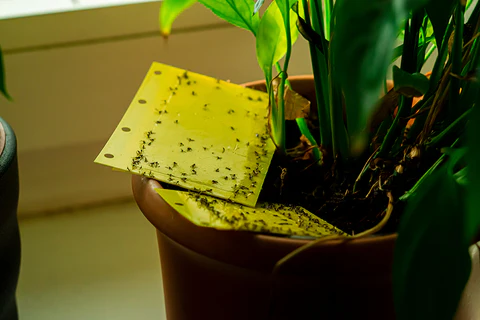
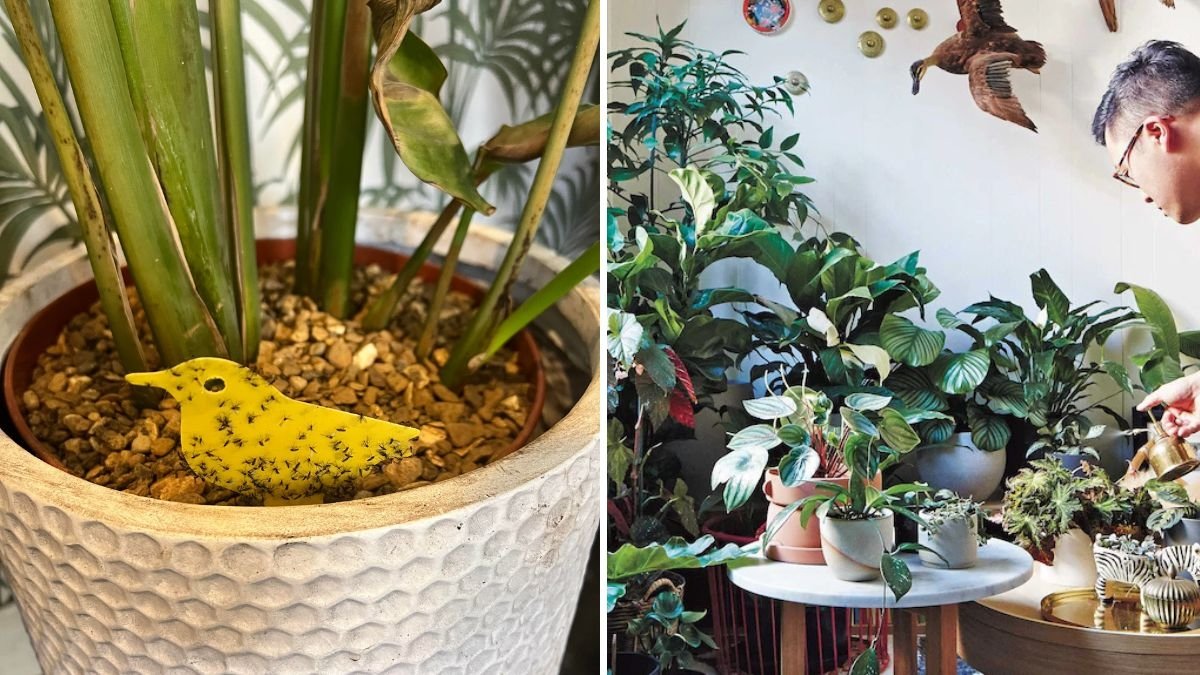
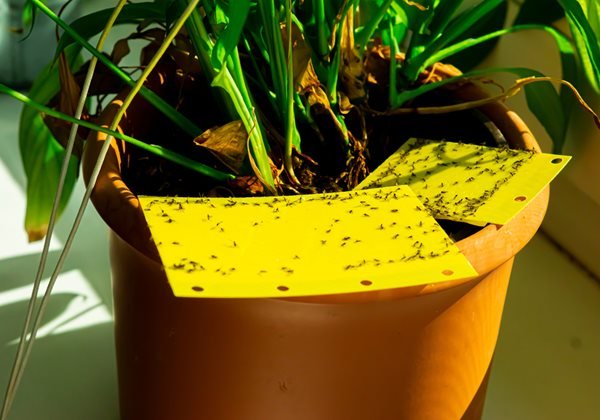
Yellow sticky traps are an affordable and organic way to catch adult fungus gnats.
How to use:
- Place yellow sticky cards near the soil surface or hang them around infested plants.
- Adult gnats are attracted to yellow and become stuck on the adhesive.
- Replace traps every 1–2 weeks or when full.
While this doesn’t kill larvae, it helps reduce the adult population and slows down egg-laying.
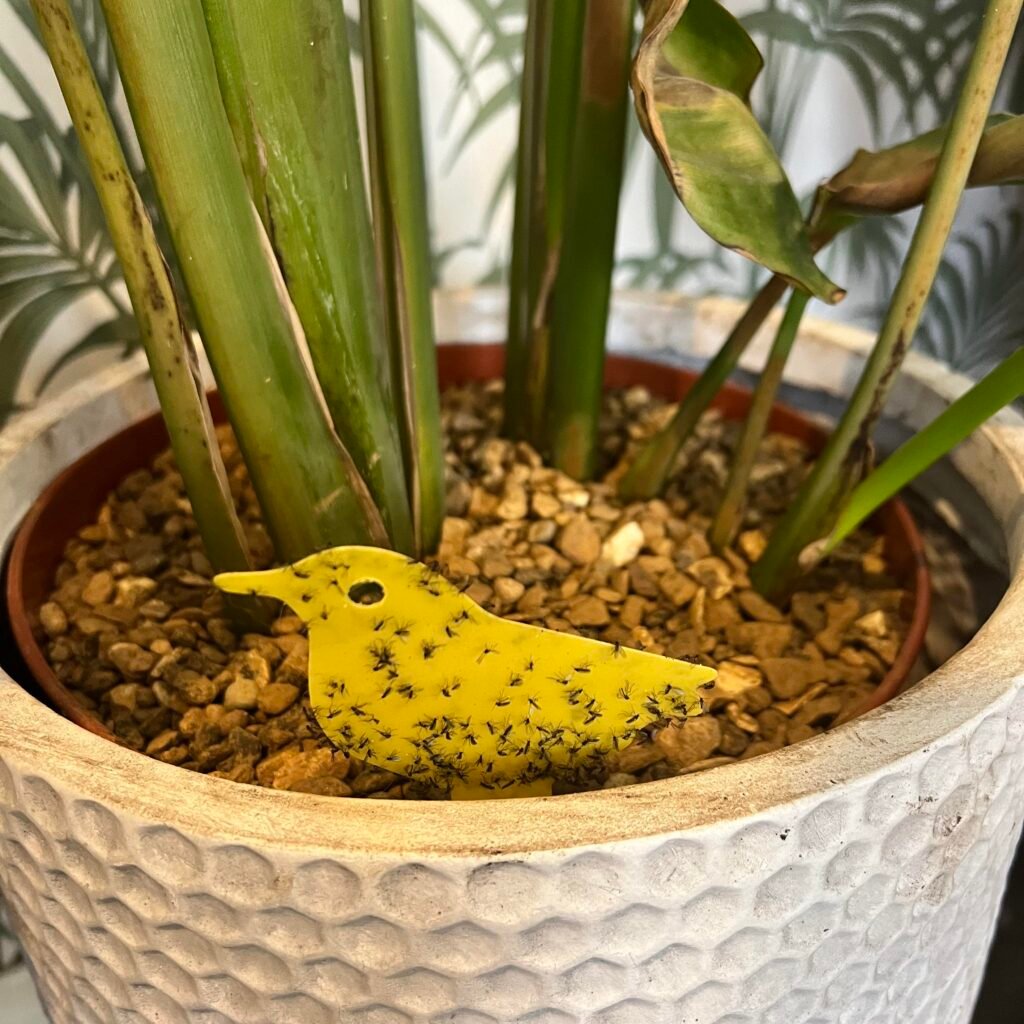
3. Top-Dress Soil With Sand or Gravel
Covering the soil surface with a dry, inorganic layer creates a physical barrier.
Options include:
- Horticultural sand
- Fine gravel
- Perlite
- Diatomaceous earth
Why it works:
- Prevents adult gnats from laying eggs in the soil.
- Creates an environment that dries quickly, deterring larvae.
Sand and gravel are especially useful for long-term prevention.
4. Neem Oil Solution
Neem oil is one of the most effective organic remedies for fungus gnats. Extracted from the neem tree, it disrupts insect development and reduces fungal growth (a gnat food source).
How to use:
- Mix 1 teaspoon neem oil with 1 quart warm water and a few drops of mild soap.
- Water your plant with this solution to target larvae in the soil.
- Spray the top of the soil and leaves to repel adult gnats.
Repeat weekly until the infestation is under control. Neem oil also helps prevent other pests like aphids and spider mites.
5. Hydrogen Peroxide Soil Drench
A mild hydrogen peroxide solution kills fungus gnat larvae instantly without harming plants when diluted correctly.
Recipe:
- Mix 1 part 3% hydrogen peroxide with 4 parts water.
- Slowly pour into the soil until it drains from the bottom.
You’ll often hear a fizzing sound—this is the peroxide reacting with organic matter and larvae. Use this treatment only occasionally to avoid disrupting beneficial microbes.
6. Cinnamon as a Natural Fungicide
Cinnamon isn’t just for baking—it’s also a natural antifungal that reduces the fungi fungus gnat larvae feed on.
How to use:
- Sprinkle ground cinnamon evenly over the soil surface.
- Alternatively, make a cinnamon tea by steeping 1–2 teaspoons in hot water, cooling, and watering the soil.
This creates a hostile environment for larvae while promoting healthier soil.
7. Beneficial Nematodes
For severe infestations, beneficial nematodes are one of the most powerful organic controls. These microscopic organisms parasitize and kill fungus gnat larvae without harming plants, pets, or people.

How they work:
- Nematodes are mixed with water and applied to the soil.
- They actively seek out larvae, penetrate them, and release bacteria that kill the pest.
- Safe for indoor use and highly effective.
While more expensive than other remedies, they’re a great long-term biological control.
8. Bacillus thuringiensis israelensis (BTI)
BTI is a naturally occurring soil bacterium that specifically targets fungus gnat larvae.
Sources:
- Available as mosquito dunks or granules (commonly sold for ponds).
- Safe for houseplants when crushed and watered into soil.
How it works:
- BTI spores produce toxins that disrupt the larvae’s digestive system, killing them.
- Completely safe for humans, pets, and plants.
9. Apple Cider Vinegar Traps
While not as powerful as other methods, vinegar traps help reduce adult gnat populations.
How to make a trap:
- Mix 2 tablespoons apple cider vinegar, a few drops of dish soap, and water in a shallow dish.
- Place near infested plants.
- Adult gnats are drawn to the vinegar, get trapped by the soap, and drown.
This is best used alongside soil treatments for maximum effectiveness.
10. Repotting With Fresh Soil
In cases of heavy infestation, repotting may be the best solution. Fungus gnat larvae often thrive in old, compacted soil.

Steps:
- Gently remove the plant from its pot.
- Wash off as much old soil as possible from the roots.
- Clean the pot with hot water and mild soap.
- Replant in fresh, sterile potting mix.
This resets the plant’s growing environment and eliminates most larvae.
Preventing Future Infestations
Once you’ve controlled fungus gnats, prevention is crucial.
Tips for long-term success:
- Avoid overwatering.
- Use well-draining, sterile potting soil.
- Store extra potting mix in a sealed container.
- Regularly monitor with sticky traps.
- Remove fallen leaves and organic debris from the soil surface.
Conclusion
Fungus gnats can be frustrating, but they don’t have to ruin your indoor gardening experience. With a combination of organic remedies like drying soil, sticky traps, neem oil, cinnamon, beneficial nematodes, and BTI, you can safely eliminate both larvae and adults without resorting to harsh chemicals.
The key is consistency—treating both the soil and adult population while maintaining healthy watering practices. By understanding their life cycle and breaking it at multiple points, you’ll not only solve the problem but also build a more resilient indoor garden.
With these natural solutions, you can say goodbye to pesky fungus gnats and enjoy thriving, healthy houseplants all year long.

Leave A Comment