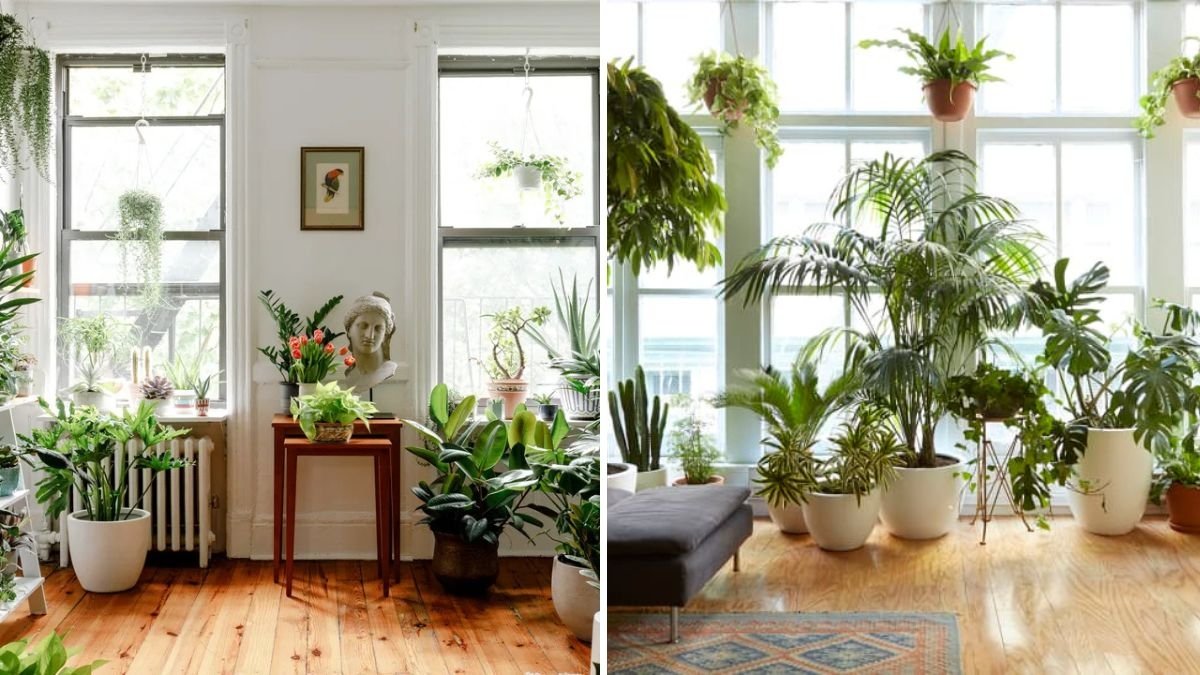
Bringing houseplants into your home is one of the easiest ways to infuse life, color, and a sense of calm into your space. But how you arrange those plants matters just as much as the plants themselves. The right placement can transform an ordinary corner into a lush sanctuary, highlight your home’s best features, and make your greenery look like a professional interior designer styled it.
Whether you’re a beginner plant parent or an experienced indoor gardener, this guide will walk you through everything you need to know about arranging houseplants for maximum visual and aesthetic impact—from layout principles to plant combinations, lighting tips, and design ideas for every room.
1. Start with a Vision and a Focal Point

Before you start moving pots around, think about what kind of atmosphere you want to create. Do you want your plants to make a bold statement, like a lush jungle in your living room, or do you prefer a minimalist arrangement that adds subtle life to your space?
Once you have a vision, identify the focal point of the room — this is where your eyes naturally go first. It could be:
- A bright window or bay nook.
- A coffee table, console, or bookshelf.
- An empty corner that needs personality.
Use one large or striking plant as your anchor piece — think fiddle leaf fig, bird of paradise, or monstera deliciosa. Then build around it with smaller plants to create balance and flow.
Pro Tip: If your room doesn’t have a natural focal point, create one! A statement plant in an eye-catching planter can easily become the centerpiece of your decor.
2. Layer Plants by Height for Depth and Drama

A well-styled room has layers — and your plants should, too. Arranging plants of varying heights helps you mimic the look of nature and creates visual interest.
- Tall Plants (Over 3 ft): Place them on the floor or in corners to draw the eye upward. Examples: Rubber Plant, Kentia Palm, Fiddle Leaf Fig.
- Medium Plants (1–3 ft): Perfect for tables, stools, or plant stands. Examples: Philodendron, Calathea, Peace Lily.
- Small Plants (Under 1 ft): Best for shelves, desktops, or window sills. Examples: Succulents, Pothos, Spider Plant, Peperomia.
When grouping, arrange plants in odd numbers (three or five). It creates a more natural and dynamic composition compared to even-numbered groupings.
Styling Tip: Position taller plants slightly off-center behind smaller ones. This layering technique gives your arrangement a three-dimensional, organic flow.

3. Mix Leaf Shapes and Textures
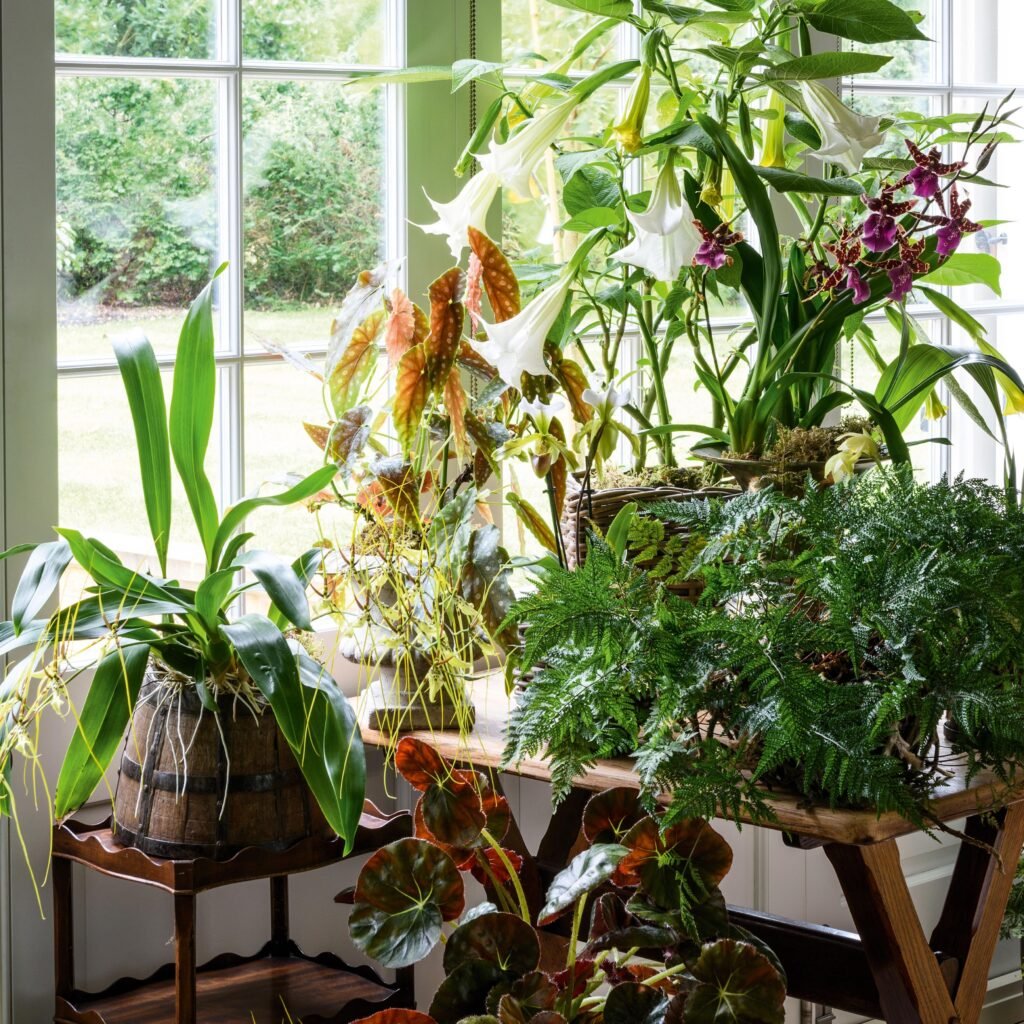
The beauty of a houseplant collection lies in diversity. Mixing plants with different leaf shapes, colors, and textures adds depth and character.
Try combining:
- Broad, glossy leaves (Monstera, Rubber Plant) with delicate, feathery foliage (Fern, Asparagus Fern).
- Upright forms (Snake Plant, ZZ Plant) with trailing vines (Pothos, String of Hearts).
- Solid greens with variegated leaves (Calathea, Aglaonema).
This contrast creates balance — just like pairing different fabrics and patterns in home décor.
Example Arrangement:
- A tall fiddle leaf fig in the corner.
- A trailing pothos on a nearby shelf.
- A patterned calathea on a table below.
The result: movement, texture, and color that feels effortless yet sophisticated.
4. Consider Lighting — The Key to Placement Success
Even the best plant arrangement won’t thrive if your plants don’t get the light they need. Lighting not only affects growth but also how your display looks throughout the day.
Bright, Direct Light:
- Ideal for sun-loving plants like Succulents, Cacti, Jade, and Bird of Paradise.
- Place them near south- or west-facing windows.
Bright, Indirect Light:
- Best for most tropical plants, including Monstera, Peace Lily, and Philodendron.
- Position them about 3–5 feet from a sunny window.
Low Light:
- Perfect for Snake Plant, ZZ Plant, and Cast Iron Plant.
- Place them in shadier corners or hallways.
Design Tip: Use light strategically. Group plants that thrive in similar light together, and use mirrors or white walls to reflect light deeper into the room.

5. Use Creative Containers for Style and Balance

The right planter can elevate your houseplants from simple to stunning. Choose containers that complement your room’s aesthetic and help define each display.
Ideas to Try:
- Ceramic pots: Sleek and polished for modern interiors.
- Terracotta: Warm and earthy for rustic or Mediterranean vibes.
- Woven baskets: Perfect for boho or natural styles.
- Metal planters: Add shine and elegance to contemporary rooms.
Balance Tip: If you’re grouping several plants, use pots in complementary colors or materials to tie the look together. Avoid using too many patterns that compete for attention.
Pro Tip: Always use planters with drainage holes or add an inner liner to keep plants healthy and prevent root rot.
6. Play with Levels — Shelves, Stands, and Hanging Displays
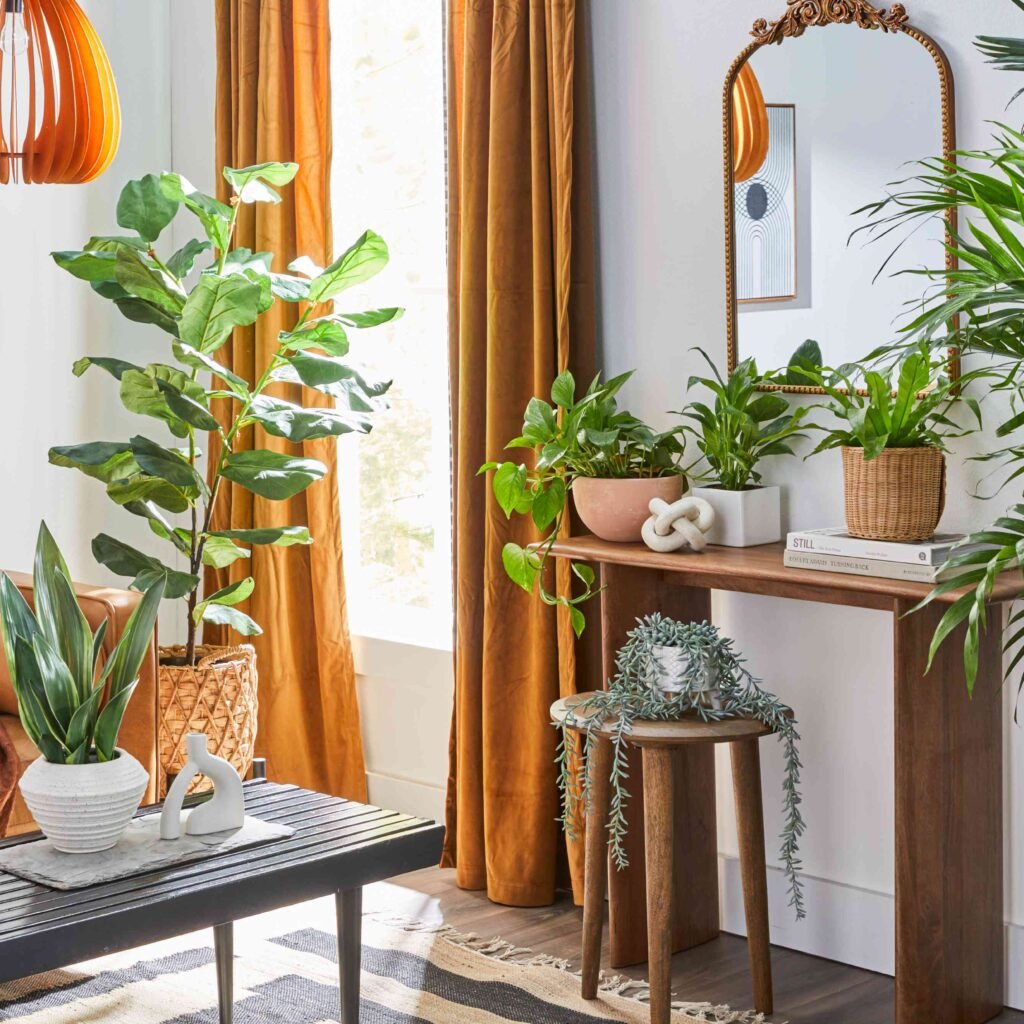
Height variation is one of the most powerful design tools for houseplants. Instead of keeping all your plants on the floor or window sill, create different visual layers.
Ways to Add Height and Depth:
- Plant Stands: Elevate medium-sized plants for a tiered effect.
- Floating Shelves: Great for small pots or trailing vines.
- Hanging Planters: Perfect for limited floor space and vertical interest.
- Wall-Mounted Pots: Add greenery without cluttering surfaces.
Styling Tip: Combine hanging and floor plants in the same view to lead the eye upward and create the illusion of a fuller, taller space.
7. Group by Theme or Mood
Organizing your plants by theme or purpose adds cohesion to your decor and helps create different ambiances throughout your home.
Popular Grouping Ideas:

- Tropical Jungle: Use bold, leafy plants like Monstera, Bird of Paradise, and Philodendron in woven baskets and large ceramic pots.
- Minimalist Zen: Focus on clean lines with Snake Plants, ZZ Plants, and small succulents in neutral pots.
- Bohemian Oasis: Mix textures — ferns, trailing vines, and palms in rattan or jute baskets.
- Wellness Corner: Include air-purifying plants like Peace Lilies, Boston Ferns, and Spider Plants near your workspace or reading nook.
Design Tip: Keep each area visually balanced — avoid overcrowding. Leave breathing space between clusters so every plant can shine.
8. Use Houseplants as Living Art
Plants can be more than decor — they can become the art. Think beyond traditional displays and use your greenery as living sculptures.
Creative Ideas:
- Plant Walls: Create a vertical garden using wall planters or shelving for a bold statement.
- Trailing Displays: Let vines cascade from bookshelves or hanging pots for a natural curtain effect.
- Table Centerpieces: Combine small potted plants, candles, and stones for a refreshing dining or coffee table display.
- Windowsill Gardens: Line your window with herbs or compact plants for a fresh, vibrant view.
Pro Tip: Use symmetry and repetition. Placing two identical plants on either side of a sofa or mirror gives a polished, intentional look.
9. Keep Proportion and Balance in Mind
Great design is all about proportion. A small plant can get lost next to oversized furniture, while a large plant can overwhelm a tight space.
Guidelines for Harmony:
- Choose planters that fit the scale of the furniture.
- Keep taller plants in corners or near walls to anchor the room.
- Use smaller plants on coffee tables, sideboards, or shelves for a light, airy touch.
- Arrange plants to frame objects like artwork or mirrors without blocking them.
Design Trick: Step back after arranging and look at the whole room. Your eyes should move naturally across the space without any one area feeling too heavy or empty.
10. Refresh and Rotate Regularly
A living display means change — and that’s part of the charm! Rotating your plants keeps the look fresh and ensures even growth.
Maintenance Tips:

- Rotate plants every few weeks for even light exposure.
- Replace tired or wilting plants with new varieties to refresh the space.
- Wipe leaves regularly to keep them dust-free and vibrant.
- Re-pot growing plants every 1–2 years to maintain health.
Changing planters seasonally or adding new textures — like a wicker basket in summer or a brass pot in winter — can also refresh your indoor garden’s aesthetic.
Final Thoughts
Arranging houseplants for maximum impact is a creative blend of art and science. It’s about balancing beauty with function — giving your plants what they need to thrive while designing a space that feels harmonious, vibrant, and alive.
By layering plants of different sizes, mixing textures, using stylish containers, and playing with light and height, you can transform any room into a lush, peaceful retreat.
Remember: there’s no single “right” way to arrange your plants — it’s all about what feels good to you. Experiment, move things around, and let your personal style shine through your indoor garden.

Leave A Comment