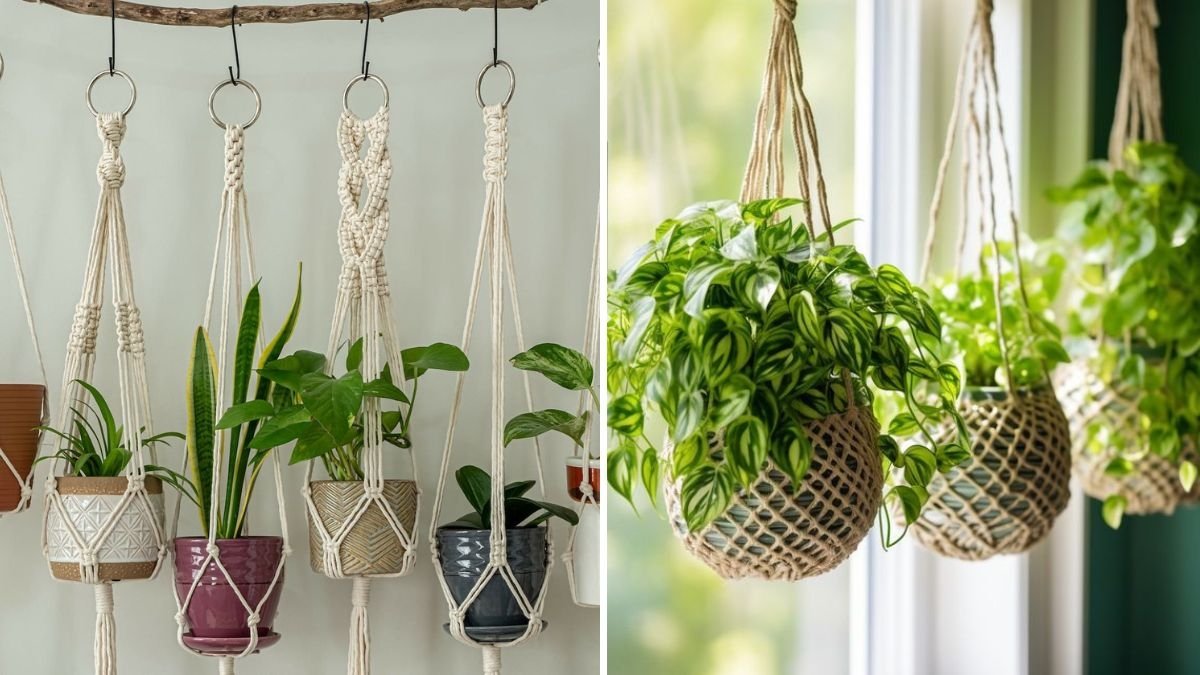
If you live in a small apartment, studio, or simply want to make the most of your available space, hanging plants are a perfect solution. They’re not only space-savers — they also add a sense of depth, softness, and personality to your home décor. Whether you’re going for a lush jungle vibe, a modern minimalist look, or cozy boho aesthetics, hanging plants can instantly elevate any room.
In this detailed guide, we’ll explore how to use hanging plants to save space and add charm, including how to choose the right varieties, display ideas for every room, styling tips, and care essentials to help your greenery flourish beautifully.
Why Hanging Plants Are Perfect for Any Space
Before we dive into the details, let’s understand why hanging plants are such an incredible design and practical choice.
- They save floor and surface space:
Hanging plants keep your greenery off tables, shelves, and countertops — perfect for smaller homes or shared spaces. - They make rooms look bigger:
Elevating plants draws the eye upward, creating a sense of vertical dimension and spaciousness. - They soften architectural lines:
Trailing vines and cascading foliage add movement and contrast to straight walls and furniture. - They purify the air and improve well-being:
Many hanging plants are excellent air purifiers, helping you breathe cleaner, fresher air while reducing stress. - They add a touch of natural art:
A hanging plant can act like a living chandelier, wall art, or curtain of greenery, enhancing aesthetics in ways regular décor can’t.
1. Choosing the Right Hanging Plants

Not all plants are suited for hanging planters. You’ll want species with trailing, cascading, or compact growth habits — ones that look great from above and thrive in containers. Here are some of the best choices for hanging displays:
Best Trailing Plants
- Pothos (Epipremnum aureum): A classic, easy-care plant with heart-shaped leaves that cascade beautifully. Thrives in low to bright light.
- String of Hearts (Ceropegia woodii): Delicate vines with tiny heart-shaped leaves — perfect for a romantic or bohemian look.
- English Ivy (Hedera helix): Adds a touch of vintage charm with its graceful vines.
- Philodendron ‘Brasil’: Bright green-and-yellow variegated leaves that add a burst of color.
- Spider Plant (Chlorophytum comosum): Air-purifying and fast-growing, with arching leaves that spill elegantly over edges.
Best Compact Plants for Hanging Displays
- Boston Fern: Lush and full, great for adding volume and softness.
- Peperomia: Compact and varied in leaf shapes and textures.
- String of Pearls (Senecio rowleyanus): Unique bead-like vines that look mesmerizing when draped over a pot.
- Dischidia nummularia (String of Nickels): Small, round leaves perfect for minimalist or modern interiors.
2. Picking the Perfect Hanging Planter
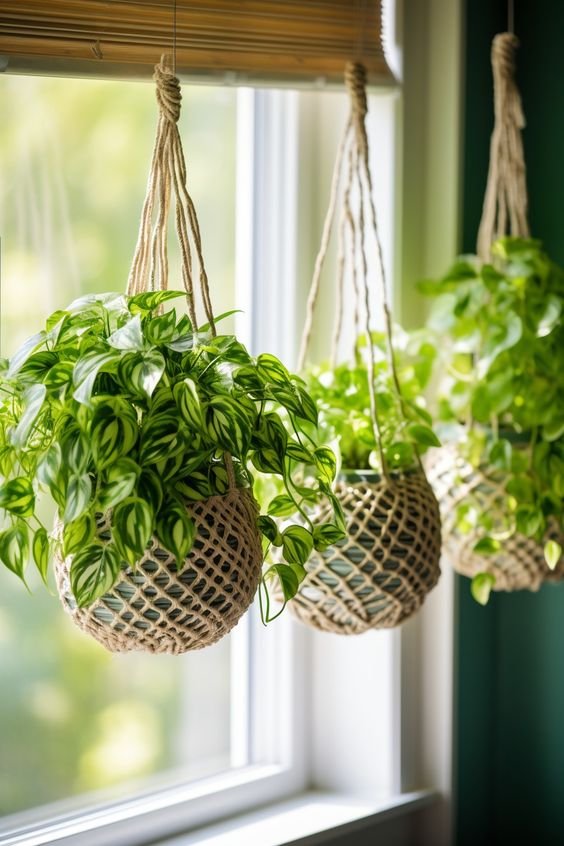
Your planter choice can completely change how your plants look and how they fit within your space. Think of the pot as an accessory — it should complement both your plant and your interior style.
Types of Hanging Planters
- Macramé Hangers: Ideal for bohemian or earthy décor. They add texture and warmth while holding a simple ceramic or terracotta pot.
- Wall-Mounted Planters: Great for modern or small spaces where floor or ceiling hanging isn’t possible.
- Ceiling Hooks with Planters: Create a floating garden effect — perfect for open layouts.
- Geometric Metal Planters: Perfect for minimalist or industrial aesthetics.
- Glass Terrariums: Elegant and modern, great for small air plants or succulents.
Pro Tip:
Match planter materials to your room’s style. Woven baskets and rattan pots add a cozy, natural touch; metal and glass fit sleek, contemporary spaces.
3. Best Locations to Hang Your Plants
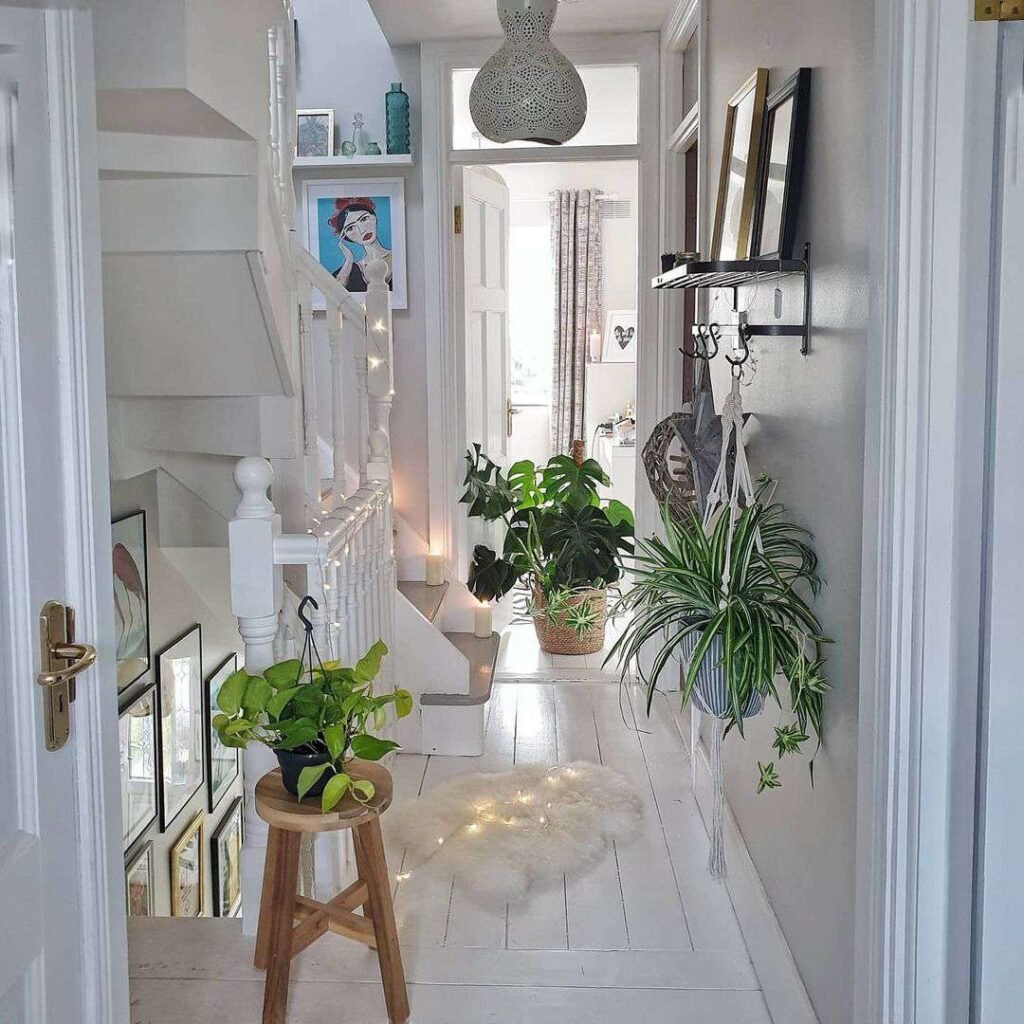
Strategic placement is key to making hanging plants both beautiful and functional. You want to highlight natural light, frame architectural features, and balance empty spaces.
Living Room:
Hang plants near windows or corners to draw the eye upward. Group two or three at varying heights to create a layered look.
Bedroom:
Add a calming touch with trailing plants near the bed or above bedside tables. Ferns and pothos help purify the air for better sleep.
Kitchen:
Hang herbs like basil, thyme, or oregano near the window for both function and freshness. Pothos or spider plants also thrive in warm, humid environments.
Bathroom:
Bathrooms with good natural light are perfect for humidity-loving plants like ferns, pothos, and philodendrons. Hanging them above the bathtub or near the mirror adds spa-like tranquility.
Work or Study Area:
Place small hanging plants near your desk or window to boost focus and creativity while softening harsh lines.

4. Create Balance and Harmony with Height and Arrangement

To make hanging plants visually appealing rather than cluttered, balance is everything.
Tips for a Balanced Look:
- Vary the heights: Hang some plants lower than others to create depth and flow.
- Group in odd numbers: Odd-number groupings (like three or five) appear more natural to the eye.
- Mix textures and leaf shapes: Combine fine-leaved ferns with broad-leaved pothos or glossy philodendrons.
- Mind the proportions: Avoid hanging too many large plants in one spot — balance them with smaller ones for an airy feel.
Creative Layouts to Try:
- Clustered Display: Group plants in a corner or above a sofa for a lush, cascading effect.
- Linear Arrangement: Line up multiple hanging planters along a window or wall for a modern, uniform look.
- Staggered Heights: Perfect for stairwells or tall ceilings to emphasize vertical movement.
5. Use Hanging Plants as Room Dividers or Decor Features
Hanging plants can do more than decorate — they can define spaces and create privacy in open layouts.
- Green Curtain: Hang several trailing plants along a curtain rod or window frame for a living curtain that filters light and adds softness.
- Room Divider: Use a hanging rod or ceiling rack to suspend plants between spaces (like separating the living area from the dining area).
- Entryway Statement: A single hanging plant in a bold pot can create a welcoming, stylish focal point near your entrance.
- Ceiling Feature: Hang plants in a cluster above a dining table or reading nook to create a cozy, canopy-like feel.
6. Lighting Tips for Healthy Hanging Plants
Since hanging plants are elevated, they often receive more or less light than floor plants, depending on placement.

Lighting Basics:
- Bright, indirect light: Ideal for most hanging plants like pothos, philodendrons, and spider plants.
- Low light: ZZ plants or English ivy are perfect for dim corners.
- Direct sunlight: Succulents, string of pearls, and air plants thrive near south-facing windows.
Artificial Light Options:
If your apartment lacks natural sunlight, use LED grow lights to supplement. Clip-on or pendant-style grow lights can be positioned stylishly over your hanging plants.
7. Watering and Maintenance Made Easy
Caring for hanging plants can be a little tricky since they’re harder to reach, but with the right approach, maintenance becomes simple.
Watering Tips:
- Use a step stool or take the pot down when watering to avoid spills.
- Check soil moisture before watering — overwatering is the most common cause of plant decline.
- Let excess water drain completely before rehanging the plant.
- Mist regularly if you have tropical plants like ferns or philodendrons to maintain humidity.
Cleaning and Pruning:
- Dust leaves gently with a soft cloth or spray them with water occasionally.
- Trim dead or overgrown vines to encourage new growth and keep the shape neat.
- Rotate plants every few weeks for even light exposure.
8. Mix Hanging Plants with Other Decor Elements
For a cohesive, charming interior, your hanging plants should complement — not compete with — your existing decor.
Decor Integration Ideas:
- Combine hanging greenery with string lights or fairy lights for a magical evening glow.
- Pair plants with natural materials like wooden furniture, rattan, or linen for a warm, organic vibe.
- Use colorful pots to accent neutral spaces or monochrome ones for a minimalist look.
- Mix greenery with wall art or mirrors to add layers of visual interest.
9. Budget-Friendly DIY Hanging Plant Ideas
You don’t need to spend much to create a stunning hanging garden. Try these simple DIY options:
- Mason jar hangers: Use twine or wire to suspend small jars for herbs or air plants.
- Old baskets: Repurpose woven baskets with liners as rustic hanging planters.
- Macramé holders: Make your own using cotton rope — it’s inexpensive and customizable.
- Recycled pots: Use painted tin cans or old mugs with drainage holes for a quirky, creative display.
10. Styling Inspiration by Design Aesthetic
Bohemian:
Layer hanging pothos, ferns, and spider plants with woven macramé and wicker planters. Add patterned textiles for a cozy, eclectic vibe.
Modern Minimalist:
Choose sleek white or black planters, hang at symmetrical heights, and use plants with clean lines like string of pearls or ZZ plants.
Scandinavian:
Use light wood accents, neutral pots, and a mix of air plants and trailing vines for a soft, airy feel.
Urban Jungle:
Go bold — fill your ceiling or wall with a variety of lush species in mismatched pots for a wild, vibrant atmosphere.
Final Thoughts
Hanging plants are more than just décor — they’re a creative way to bring nature into your home, maximize space, and infuse charm into every corner. Whether you’re adorning a sunny window, defining open spaces, or simply adding life to bare walls, hanging plants offer limitless possibilities.
From cascading pothos and elegant ferns to unique strings of pearls, these green companions can make even the smallest apartment feel like a tranquil retreat. With thoughtful arrangement, the right lighting, and a touch of creativity, you’ll have a space that’s not only functional but full of life and beauty.

Leave A Comment