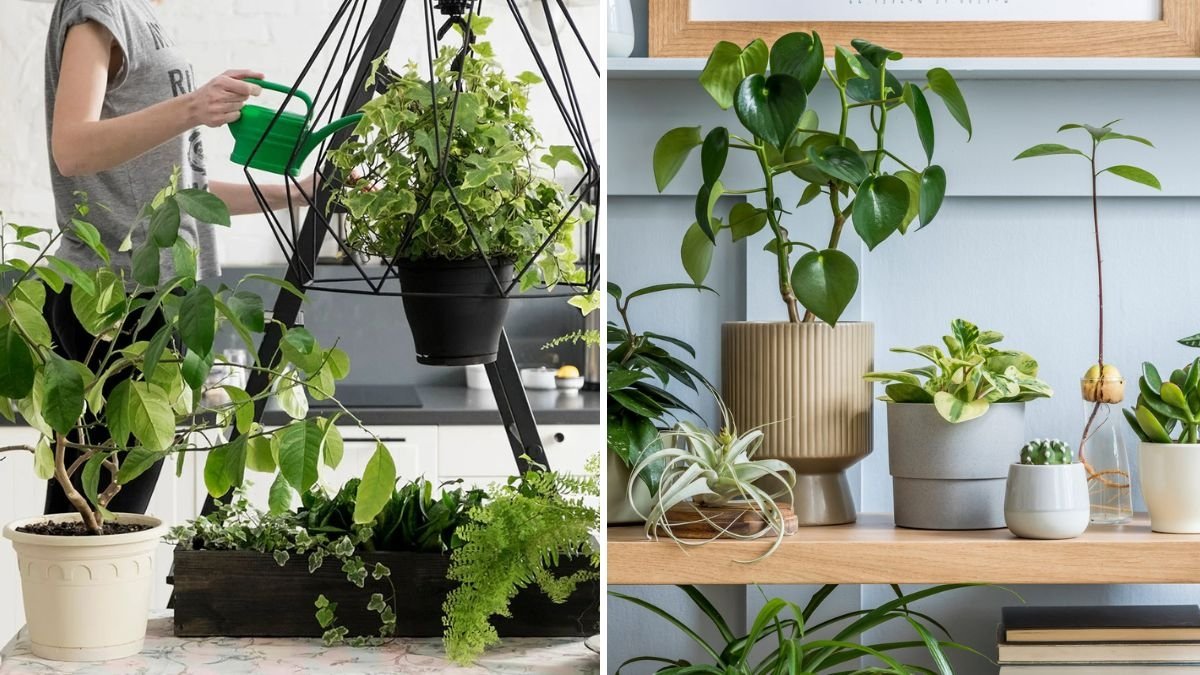
Going on vacation is exciting — but if you’re a plant parent, leaving your beloved indoor garden unattended can stir up anxiety. Whether you’ll be gone for a few days or a couple of weeks, you might worry about returning to wilted leaves, dry soil, or dying plants.
The good news? With some thoughtful planning and simple tricks, your plants can thrive in your absence. By understanding their needs — water, light, humidity, and temperature — and preparing them beforehand, you can ensure they remain healthy and happy until you’re back home.
This article explores how to keep indoor plants alive, hydrated, and stress-free while you’re away, with practical strategies that suit every plant lover’s lifestyle.
1. Understand Your Plants’ Needs Before You Leave

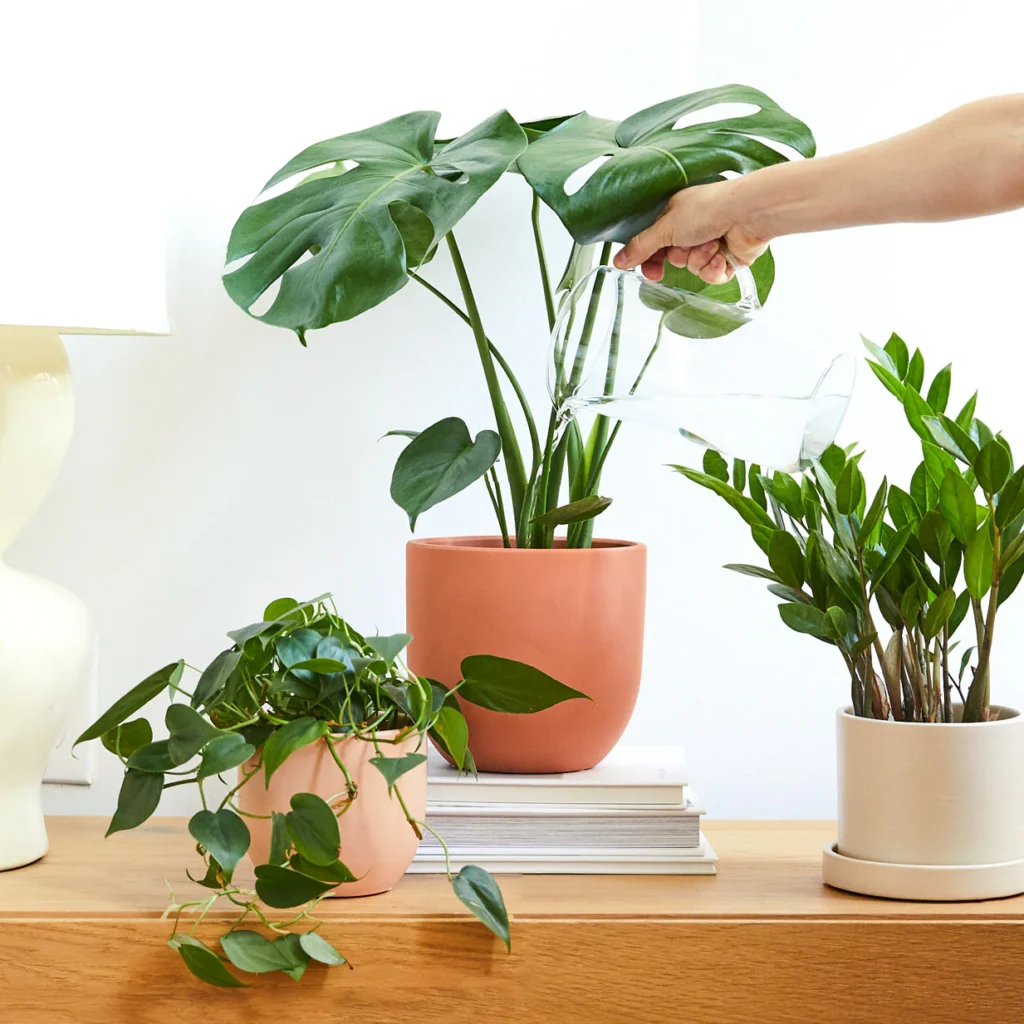
Every plant has unique care requirements. Succulents, for instance, can go weeks without water, while tropical species like ferns or peace lilies need consistent moisture. Before planning your plant-care routine for vacation, take time to categorize your plants by water and light requirements.
Water-needy plants:
- Peace lily
- Ferns (Boston, maidenhair)
- Calathea
- Pothos
Drought-tolerant plants:
- Snake plant
- ZZ plant
- Aloe vera
- Cacti and succulents
Knowing which plants need frequent attention helps you choose the right watering strategy — and prevents over- or under-watering during your trip.
2. Water Deeply Before You Go

A thorough watering session right before you leave is the first step to ensuring your plants stay hydrated.
How to do it properly:
- Water plants early in the morning to let excess water drain.
- For potted plants, water until you see moisture seeping from the bottom drainage holes.
- Empty saucers or trays beneath pots to prevent root rot.
- For plants in large containers, consider placing them in a shallow tray of pebbles and water to increase humidity.
Avoid last-minute overwatering just before leaving. Excessive water without proper drainage can suffocate roots, causing rot while you’re away.
3. Move Plants Away from Direct Sunlight
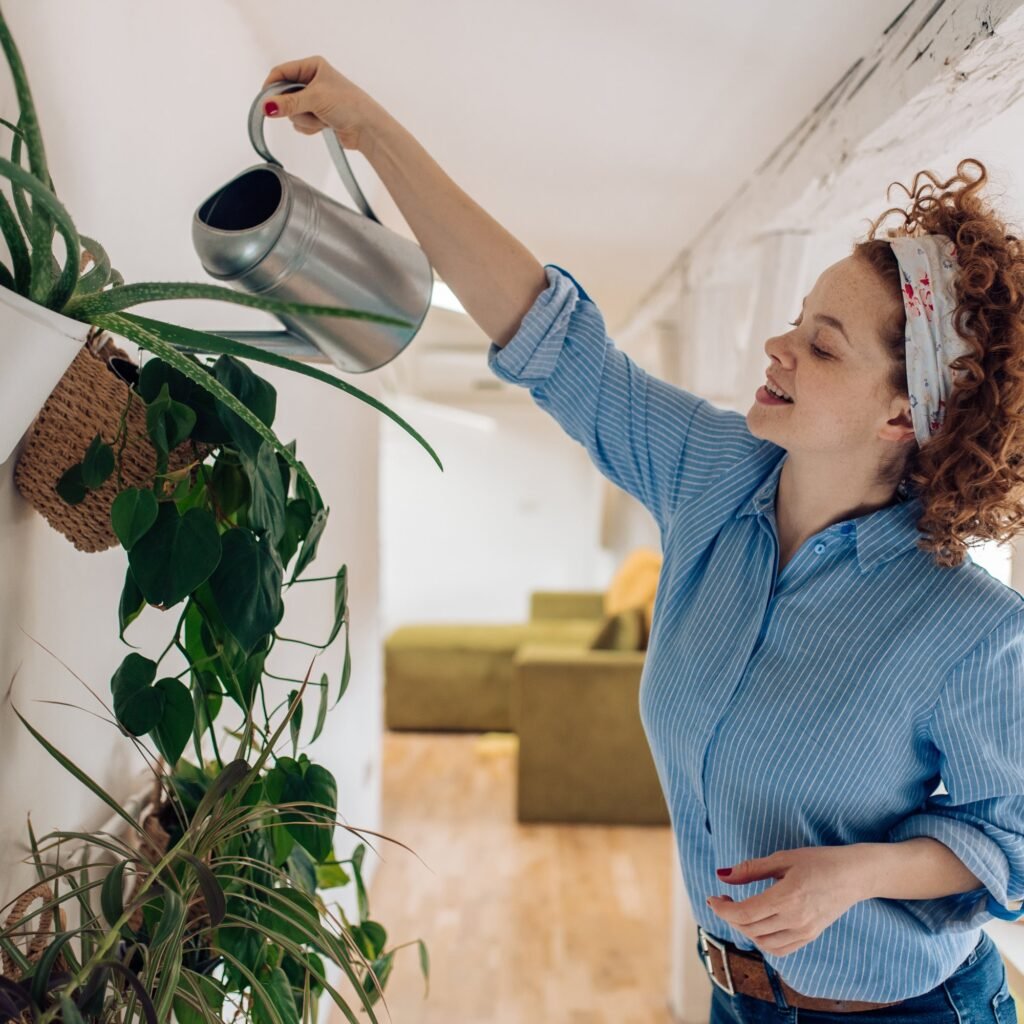
Light is essential for growth, but too much exposure when you’re not around to monitor soil moisture can lead to dehydration.
If your plants typically sit in bright sunlight, move them slightly away from windows or use sheer curtains to filter harsh rays.
- For tropical plants: Provide bright, indirect light.
- For succulents and cacti: Keep them in partial sunlight; they store water efficiently.
- For shade-loving plants: Dim corners or north-facing windows are ideal.
This small change helps reduce water loss through evaporation and keeps soil moisture stable while you’re gone.
4. Create a Humid Environment
Indoor air can become dry, especially during hot or air-conditioned weather. Increasing humidity helps plants retain moisture longer, reducing their need for frequent watering.
Here are some easy humidity-boosting techniques:
a. Group plants together
Plants release moisture through transpiration. Grouping them close allows them to share humidity, creating a mini greenhouse effect.
b. Use a pebble tray
Place pebbles in a shallow tray, add water, and set pots on top (without touching the water directly). The evaporating moisture keeps the air humid around the plants.
c. Use plastic bag “mini-greenhouses”
For small plants, cover them loosely with a clear plastic bag supported by sticks or stakes. This traps humidity without suffocating them. Ensure the bag doesn’t touch the leaves to avoid mold.
These methods create a microenvironment that mimics natural humidity, helping your plants stay hydrated longer.
5. DIY Self-Watering Techniques
If you’ll be away for a week or two, self-watering systems are lifesavers. They provide consistent moisture without overwatering.
Here are some tried-and-tested methods:
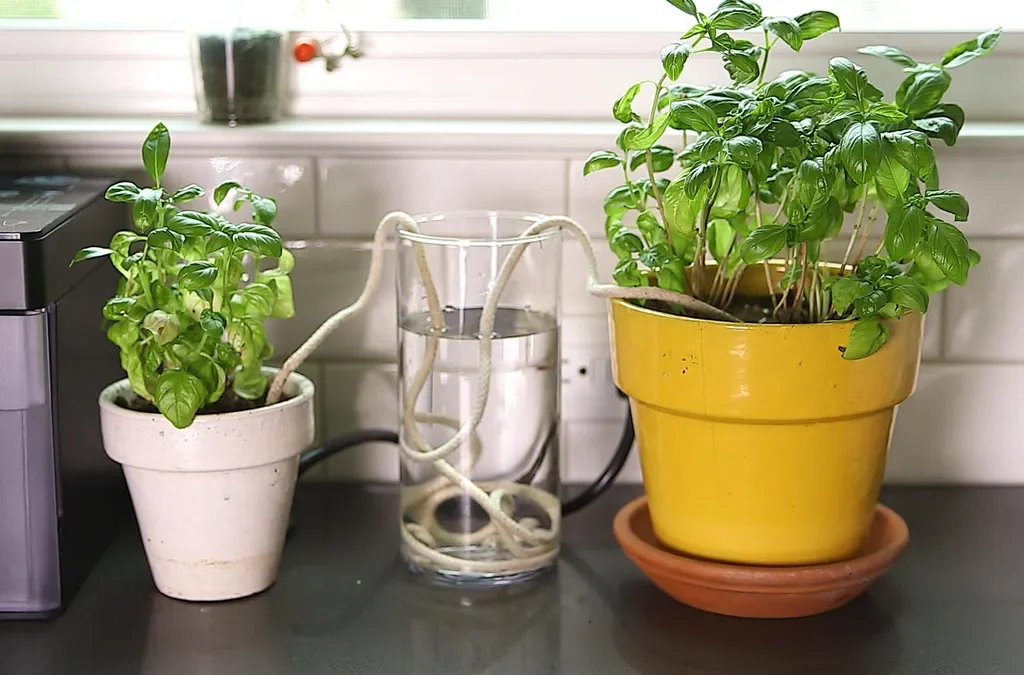
a. Wick Watering System
You’ll need cotton rope, string, or even shoelaces.
- Place one end of the rope into a water container and the other end into the soil.
- Water will travel up the rope through capillary action, keeping the soil damp.
- Ensure the water source is higher than the pot for proper flow.
b. Plastic Bottle Drip System
Perfect for large pots or outdoor balconies.
- Fill a plastic bottle with water.
- Poke small holes in the cap.
- Insert the bottle upside down into the soil near the plant’s base.
- Water drips slowly, maintaining consistent moisture.
c. Water Bath Method
For small to medium-sized pots.
- Fill a shallow basin with a few centimeters of water.
- Place pots (with drainage holes) in the basin.
- The soil will soak up water as needed through capillary action.
Each of these systems can keep plants watered for 7–14 days, depending on humidity, temperature, and soil type.
6. Mulch to Lock in Moisture
Mulching isn’t just for outdoor gardens — it’s an excellent technique for indoor plants, too.
Spread a layer of organic mulch (like coconut coir, moss, or bark chips) over the soil surface. This helps:
- Slow down evaporation.
- Regulate soil temperature.
- Maintain consistent moisture levels.
Even a thin layer can extend soil dampness by several days, reducing the risk of plants drying out while you’re away.
7. Invest in Self-Watering Pots or Devices
For frequent travelers, self-watering planters are an excellent investment. They include built-in reservoirs that release water gradually as the soil dries.
Modern options come with moisture meters, timers, and even smartphone integration, allowing you to monitor conditions remotely.
Alternatively, you can use automatic irrigation spikes that attach to bottles and slowly release water into the soil. These are especially useful for small indoor setups.
8. Maintain Airflow and Temperature
Stagnant, hot air can stress plants while you’re gone. Maintaining proper temperature and ventilation ensures they stay comfortable.
Before leaving:
- Keep curtains partly closed to reduce heat buildup.
- Set the thermostat to moderate temperature (around 22–25°C).
- Avoid sealing rooms entirely; allow minimal airflow.
If possible, run a ceiling or oscillating fan on a low setting with a timer to keep the air moving — preventing mold or fungal growth.
9. Ask for a “Plant Sitter” (If Possible)
Sometimes, the best care comes from human hands. If you’re leaving for more than two weeks, ask a friend, neighbor, or relative to check in once or twice.
Leave detailed instructions:
- How much and how often to water each plant.
- Which ones prefer bright vs. shaded spots.
- Contact info in case they have questions.
You can even label plants with small notes — it makes it easier for your helper and ensures consistent care in your absence.
10. Prepare Your Plants for Absence
Beyond watering, a few extra steps will help your plants stay resilient while you’re away:
a. Prune before you go
Remove yellow or dead leaves and spent flowers. This reduces the plant’s energy consumption and prevents mold.
b. Repot if necessary
If a plant has outgrown its pot, repot it a few weeks before leaving. Fresh soil retains moisture more effectively.
c. Fertilize lightly
Avoid heavy fertilization right before departure — it encourages new growth, which needs frequent watering. Instead, apply a mild, slow-release fertilizer a week prior.
d. Check for pests
Inspect for mites or fungus gnats. Treat them beforehand, as unattended infestations can worsen rapidly.
e. Mist thoroughly
Give your plants a generous misting the day before you leave to boost humidity.
These small preventive measures ensure your plants are in top condition to handle your absence gracefully.
11. What to Expect When You Return
Even with perfect planning, a little wear and tear is normal — some drooping or yellowing leaves can happen.
Here’s how to revive your plants upon returning:
- Check soil moisture before watering — avoid shocking roots with sudden drenching.
- Trim damaged leaves to encourage fresh growth.
- Wipe dust off leaves to restart photosynthesis efficiently.
- Gradually reintroduce sunlight if you had moved plants to low-light areas.
Within a few days, most healthy plants will bounce back quickly with regular care.
12. Extra Tips for Frequent Travelers
If travel is part of your lifestyle, here’s how to build a vacation-proof plant collection:
- Choose low-maintenance species like snake plants, ZZ plants, and philodendrons.
- Group plants with similar needs together for easy care.
- Invest in smart irrigation systems that sync with your phone.
- Keep backup grow lights with timers for consistent lighting.
This setup ensures you can enjoy travel freedom without compromising your indoor jungle.
Conclusion
Keeping indoor plants happy while you’re on vacation doesn’t have to be stressful. The secret lies in understanding your plants’ unique needs and planning ahead — from adjusting light and humidity to setting up self-watering systems.
Whether you use simple DIY tricks like the wick method or invest in modern self-watering pots, these strategies allow your plants to stay healthy and hydrated even when you’re away.
When you return from your trip to find vibrant, green leaves and thriving pots, you’ll know that your pre-vacation efforts paid off — giving both you and your plants the gift of peace and happiness.

Leave A Comment