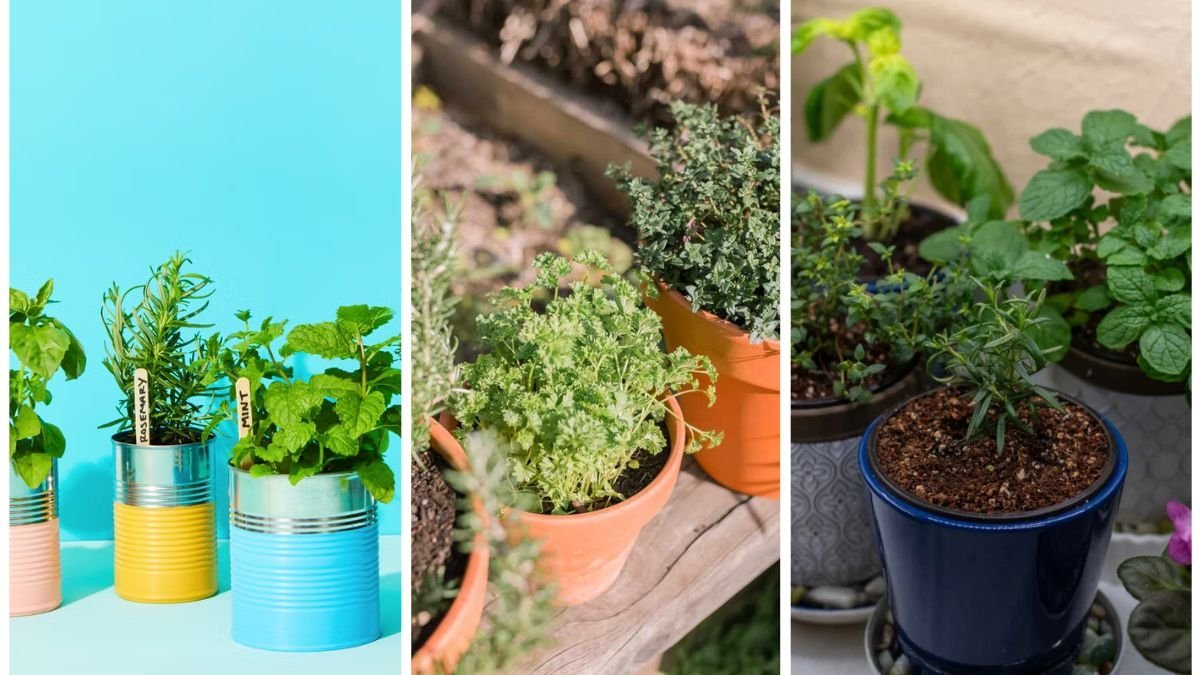
Herbs have long held a place in kitchens, gardens, and apothecaries, valued for their flavor, fragrance, and healing properties. For urban gardeners and culinary enthusiasts alike, growing herbs in containers offers a space-saving, manageable, and visually pleasing way to bring greenery into everyday life. Whether you’re placing potted herbs on a sunny balcony, windowsill, or patio, they can thrive all season long—with the right care.
Unlike herbs planted in the ground, potted herbs have unique needs and vulnerabilities. Factors such as soil type, drainage, sunlight, and watering require more attention in container gardening. This article provides a comprehensive guide on how to keep your potted herbs healthy and productive throughout the growing season—ensuring your basil stays bushy, your thyme fragrant, and your mint under control.
1. Choosing the Right Herbs for Pots
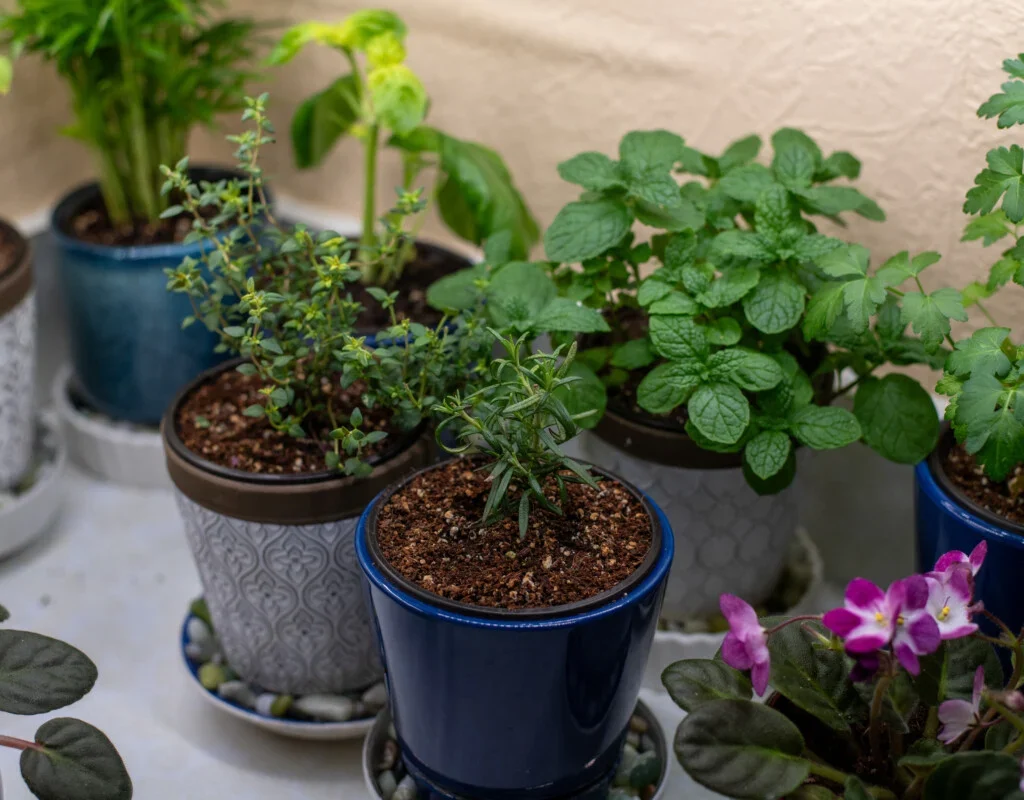
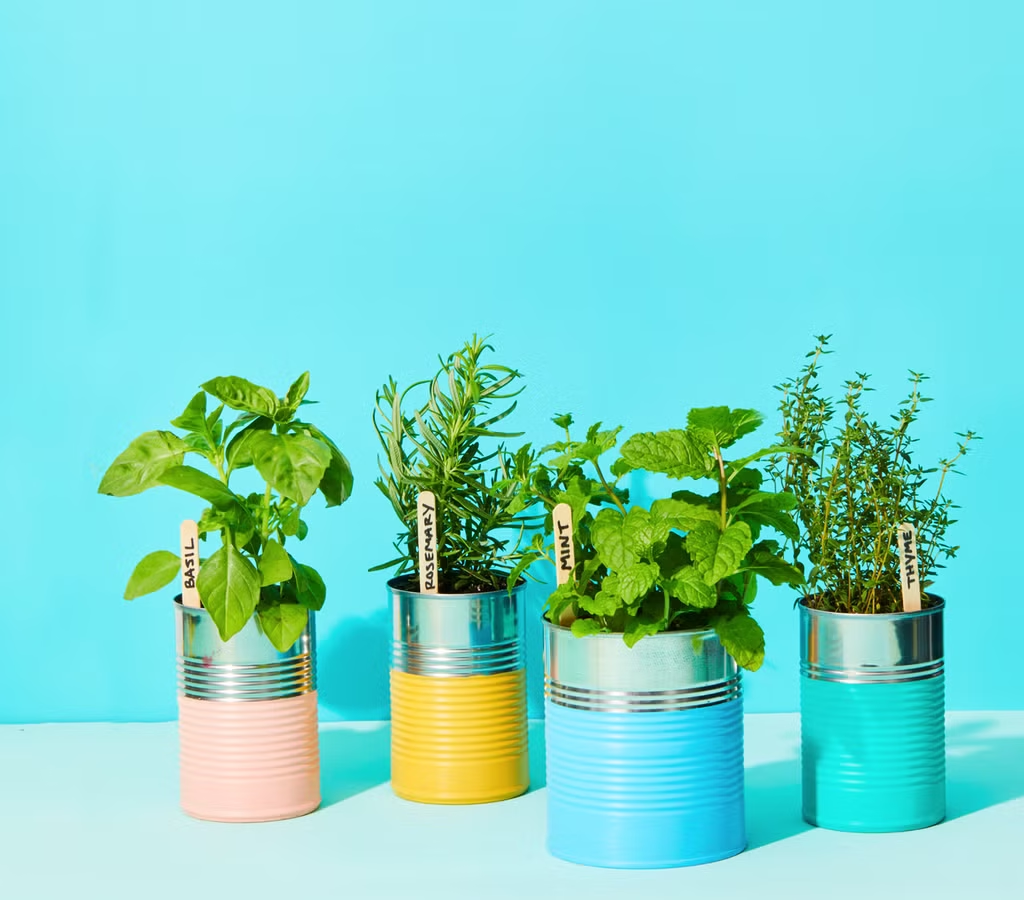
Not all herbs are equally suited to container growing. The best herbs for pots are those that adapt well to confined root spaces and can thrive in full or partial sun.
Top Herbs for Containers:
- Basil – Annual; requires full sun and regular watering.
- Thyme – Perennial; drought-tolerant and ideal for sunny spots.
- Mint – Perennial; vigorous grower that can overwhelm beds, so perfect for pots.
- Parsley – Biennial; prefers consistent moisture and partial shade.
- Chives – Perennial; hardy and low-maintenance.
- Rosemary – Woody perennial; thrives in full sun with good drainage.
- Oregano – Perennial; excellent for containers in hot, dry climates.
- Cilantro – Fast-growing annual; prefers cooler temperatures and partial shade.
Tip: Group herbs by similar water and light needs to simplify care.
2. Selecting the Best Containers
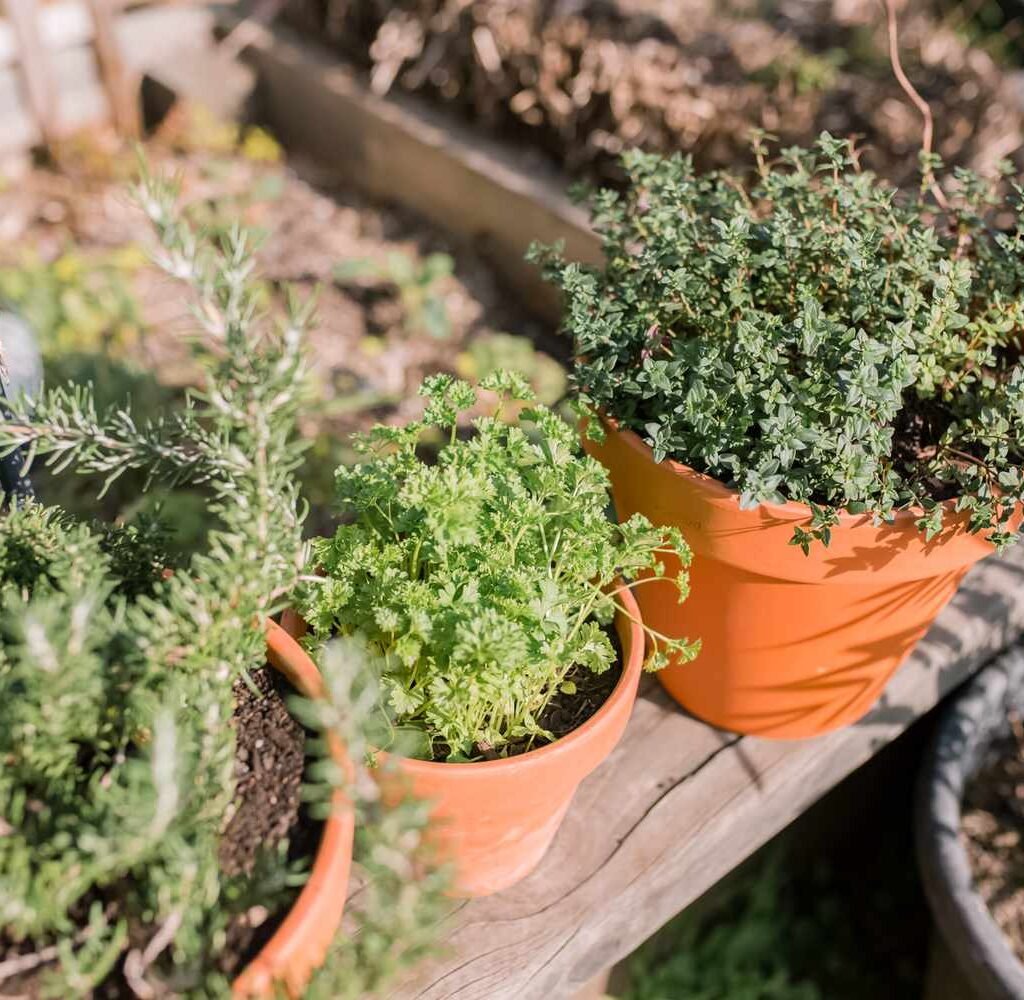
Herbs don’t require overly deep containers, but adequate space, proper drainage, and the right material are crucial.
Container Tips:
- Size: Most herbs do well in containers that are 6–12 inches deep. Larger containers are better for fast-growing herbs like basil or mint.
- Material:
- Terracotta: Breathable but dries out quickly.
- Plastic: Retains moisture, lightweight, but may overheat in direct sun.
- Ceramic/Glazed: Attractive and moisture-retentive but heavy.
- Fabric grow bags: Provide air pruning for roots and great drainage.
- Drainage: Always ensure containers have drainage holes. Without drainage, water collects and causes root rot—a common killer of potted herbs.
3. Using the Right Soil Mix
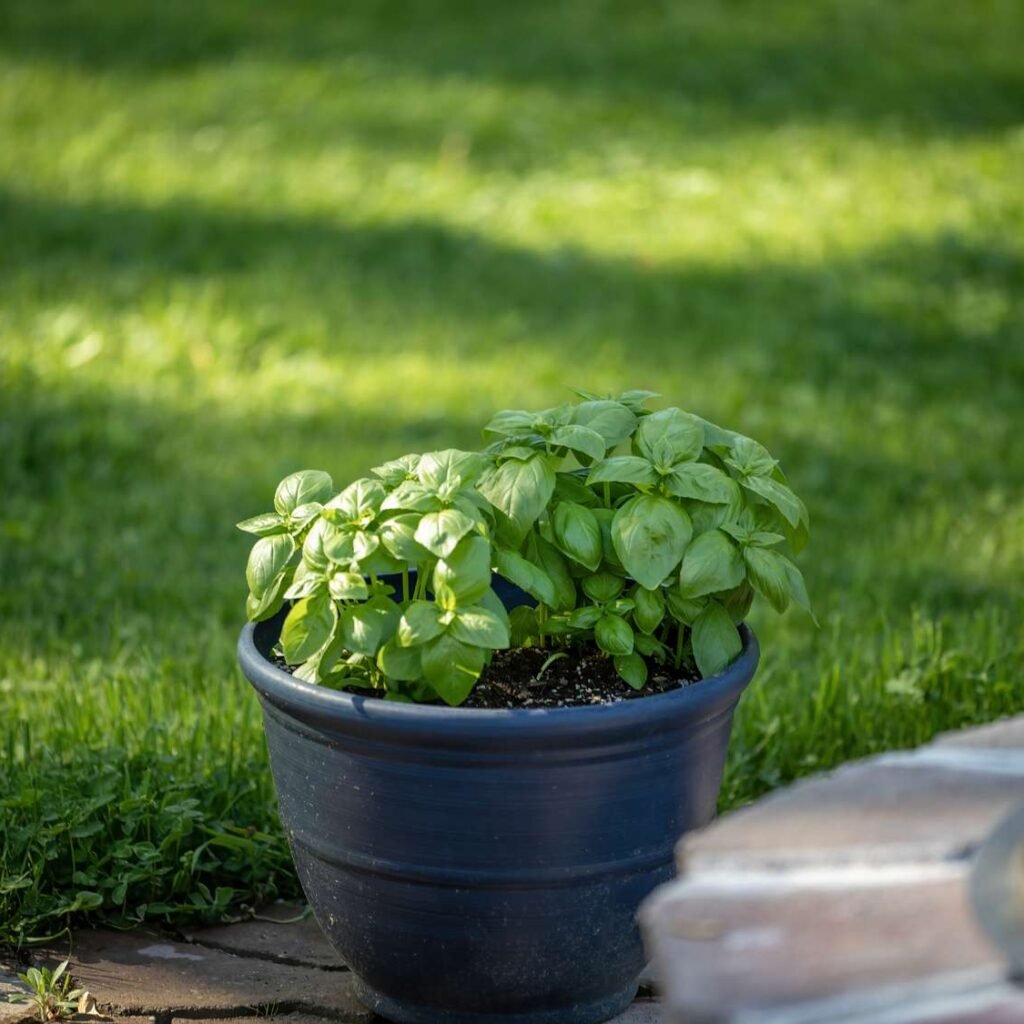
Soil is the foundation of herb health. Garden soil is too dense for containers and often lacks the proper aeration.
Ideal Soil for Herbs:
- Use a light, well-draining potting mix. A blend containing peat moss or coconut coir, perlite, and compost is ideal.
- Avoid soil mixes that contain moisture-retaining crystals for herbs like rosemary or thyme, which prefer drier conditions.
pH and Nutrients:
- Most herbs prefer a neutral to slightly alkaline pH (6.0 to 7.5).
- Mix in organic compost or slow-release fertilizer for long-term nutrition.
4. Sunlight: Understanding Light Needs
Full-Sun Herbs (6–8 hours/day):
- Basil
- Rosemary
- Oregano
- Thyme
- Sage
Partial Shade Herbs (3–5 hours/day):
- Parsley
- Cilantro
- Mint
- Chervil
If your growing area is limited to a shady balcony, opt for herbs that tolerate low light. Rotate pots weekly for even growth and prevent legginess.
Indoor Growing: If growing indoors, place pots in a south-facing window or use grow lights to provide sufficient light.
5. Watering Wisely
Watering is one of the most critical and misunderstood aspects of keeping potted herbs thriving. Too little water and they wilt; too much and they rot.
General Guidelines:
- Water when the top inch of soil feels dry.
- Water deeply until excess drains from the bottom.
- Avoid letting pots sit in saucers filled with water.
Herb-Specific Watering Needs:
- High water needs: Basil, parsley, cilantro
- Moderate needs: Chives, mint
- Low water needs: Rosemary, thyme, oregano
Tip: Water in the morning to reduce evaporation and prevent fungal growth.
6. Fertilizing for Healthy Growth
While herbs are generally light feeders, potted herbs benefit from supplemental nutrition.
Fertilizer Tips:
- Use a balanced, water-soluble organic fertilizer (e.g., 10-10-10 or 5-5-5) every 3–4 weeks.
- Over-fertilizing can lead to lush foliage with reduced flavor, especially in herbs like basil and oregano.
- For leafy herbs (like parsley and basil), choose a nitrogen-rich fertilizer.
- For woody herbs (like rosemary and thyme), use a low-nitrogen mix to prevent leggy growth.
7. Pruning and Harvesting Regularly
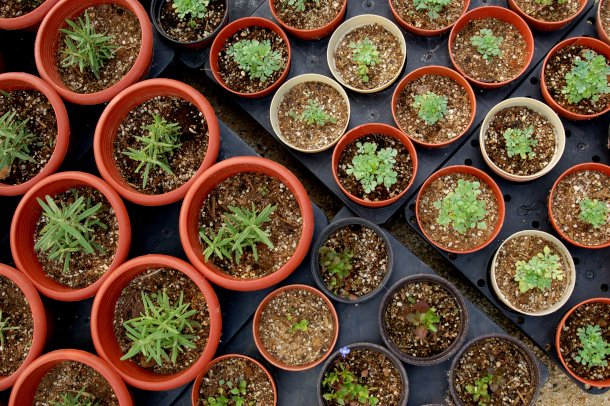
Regular harvesting promotes bushier, more productive plants. If left untrimmed, many herbs will bolt (flower and go to seed), which usually decreases flavor.
How to Harvest:
- Basil: Pinch off the top sets of leaves regularly to prevent flowering.
- Thyme/Rosemary: Snip off stems just above a pair of leaves.
- Parsley: Cut outer stems near the base to encourage new growth.
- Cilantro: Harvest frequently before it bolts in hot weather.
Tip: Never harvest more than one-third of a plant at a time. This ensures healthy regrowth.
8. Managing Pests and Diseases
Potted herbs are less vulnerable to soil-borne diseases, but still prone to pests like:
- Aphids: Found on new growth; wash off with water or use neem oil.
- Spider Mites: Fine webbing and stippled leaves; increase humidity and spray with insecticidal soap.
- Whiteflies: Small flying insects; use sticky traps and neem oil.
- Fungal diseases: Caused by overwatering or poor airflow. Space pots adequately and avoid wetting foliage.
Natural deterrents include:

- Companion planting (e.g., basil repels aphids)
- Homemade sprays (garlic or chili-based solutions)
- Diatomaceous earth for crawling insects
9. Dealing with Weather and Seasonal Changes
Hot Weather:
- Use shade cloth or relocate containers during midday heat
- Water more frequently
- Mulch with straw or bark to retain moisture
Cold Weather:
- Bring tender herbs indoors before frost
- Use rolling plant caddies for easy movement
- Protect with cloches or frost blankets if left outside
Overwintering Tips:
- Perennial herbs like thyme, oregano, and chives can survive outdoors in pots with insulation.
- Tender herbs like basil and parsley should be harvested completely or grown indoors under lights.
10. Creative Container Herb Garden Ideas
Maximize space and visual appeal with creative setups:
- Tiered herb stands: Perfect for patios with limited ground space.
- Hanging baskets: Great for trailing herbs like thyme or oregano.
- Vertical wall planters: Ideal for small balconies or porch walls.
- Windowsill boxes: Keep fresh herbs within reach of your kitchen.
Design Tip: Mix contrasting leaf textures and colors. For example, pair broad-leafed basil with feathery dill or silvery sage.
Conclusion
Growing herbs in containers offers a rewarding and practical way to enjoy fresh flavors and greenery all season long. With proper planning—starting from choosing the right herbs and containers to mastering watering, pruning, and sunlight—you can cultivate a thriving herb garden in even the smallest of spaces.
Container herbs are not only functional for cooking but also enhance the beauty and atmosphere of your home, patio, or balcony. They invite pollinators, purify air, and connect us to the rhythms of nature.
Whether you’re a beginner gardener or a seasoned green thumb, these practices will help ensure your potted herbs remain lush, healthy, and productive from spring to fall—and beyond, if you’re willing to bring them indoors.

Leave A Comment