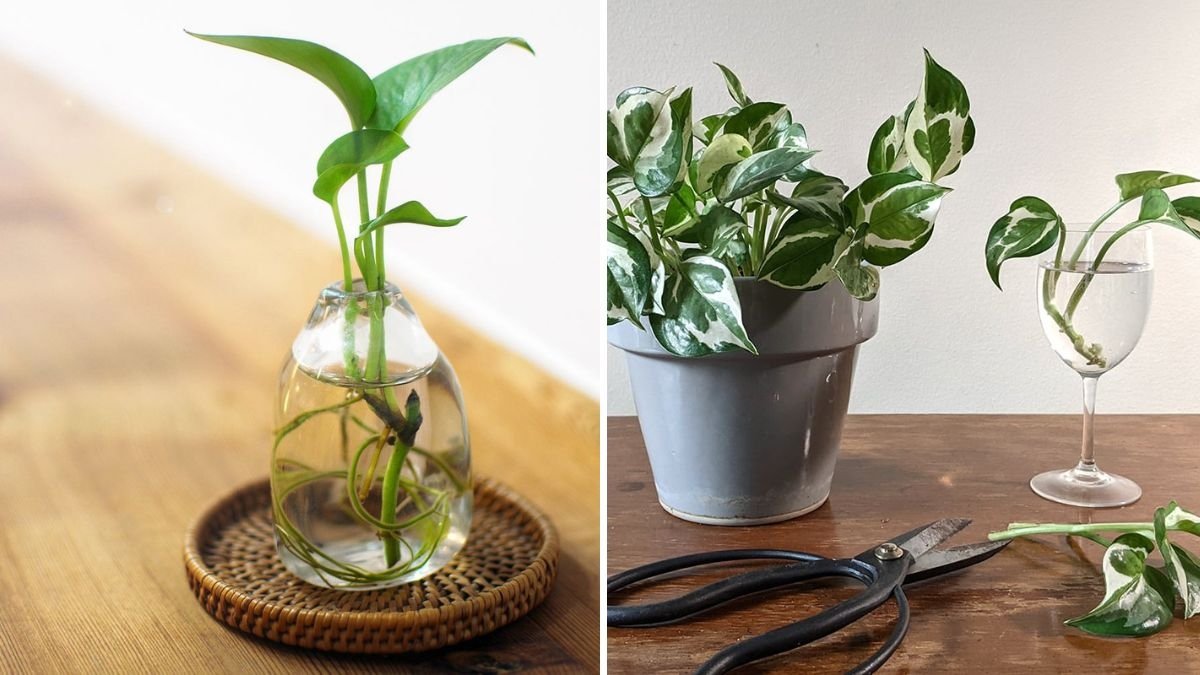
Few houseplants are as beloved as pothos (Epipremnum aureum). Known for their trailing vines and heart-shaped leaves, these hardy plants thrive in a wide range of conditions, making them perfect for beginners and seasoned plant parents alike. But one of the best things about pothos is how easy they are to propagate. With just a few simple steps, you can turn a single vine into multiple thriving plants—without needing special equipment or advanced skills.
Whether you want to expand your own collection, create fuller pots, or share cuttings with friends, propagating pothos is both fun and rewarding. In this guide, we’ll explore everything you need to know: why propagation works so well with pothos, the tools you’ll need, step-by-step instructions, and aftercare tips to ensure your new plants thrive.
Why Propagate Pothos?
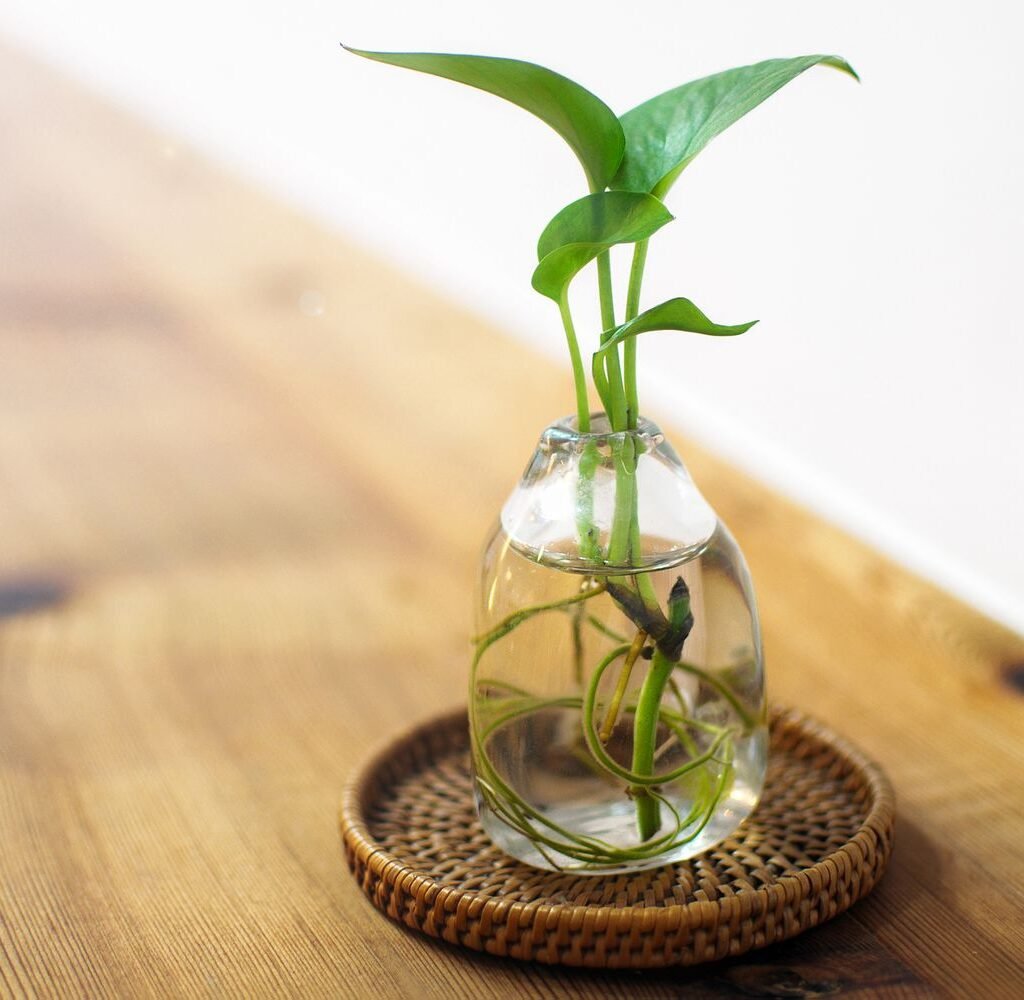
Propagation is the process of growing a new plant from a cutting or division of an existing one. For pothos, propagation offers several benefits:
- Affordability: Instead of buying new plants, you can multiply your existing ones for free.
- Home décor: Create trailing displays in hanging baskets, shelves, or even water-filled vases.
- Fuller growth: Adding propagated cuttings back into the same pot makes the plant bushier.
- Sharing: Pothos cuttings make thoughtful, low-maintenance gifts.
- Sustainability: Propagation reduces waste and promotes eco-friendly plant care.
Because pothos are resilient and root easily, they’re among the most popular plants for beginners learning propagation.
The Best Time to Propagate Pothos
Timing matters for successful propagation. The best seasons are spring and summer, when the plant is actively growing. During this phase, cuttings root faster and adapt more easily to new environments.
Avoid propagation in late fall and winter, when growth slows. While you can still take cuttings during these months, they may take longer to develop roots and require more patience.

Tools and Materials You’ll Need
Propagation doesn’t require expensive equipment, but having the right tools ensures success:
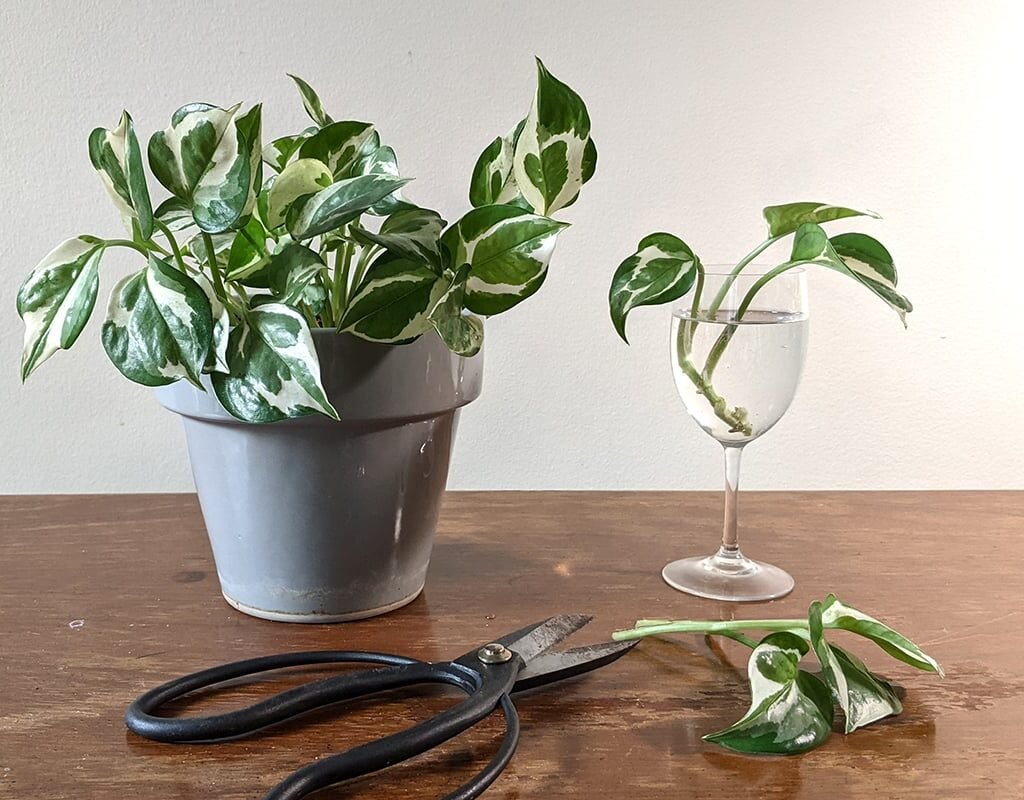
- Sharp, sterilized scissors or pruning shears.
- A clean glass jar, vase, or cup (if propagating in water).
- Fresh potting soil (if propagating directly in soil).
- A small nursery pot with drainage holes.
- Optional: rooting hormone (for faster root development).
- Fresh water (room temperature, chlorine-free if possible).
Anatomy of a Pothos Cutting
Before you start, it’s important to understand the parts of a pothos vine:
- Node: The small bump along the stem where roots and leaves emerge. This is where new roots will form.
- Internode: The space between two nodes.
- Leaf: The green, heart-shaped foliage that provides energy through photosynthesis.
For successful propagation, your cutting must include at least one node. Without it, roots cannot form.
Step-by-Step Guide to Propagating Pothos
Step 1: Select a Healthy Vine
Choose a strong, mature vine with several leaves and nodes. Avoid weak or diseased stems, as these may not root well.
Step 2: Make the Cut
- Using clean, sharp scissors, snip just below a node.
- Each cutting should ideally have 2–4 leaves and at least one node.
- Remove any leaves near the bottom node to prevent rotting in water or soil.
Step 3: Decide Between Water or Soil Propagation
Water Propagation
- Place the cutting in a clear jar filled with water, ensuring at least one node is submerged.
- Keep leaves above the waterline to avoid decay.
- Position the jar in bright, indirect light.
- Change the water every 3–5 days to keep it fresh and oxygenated.
Roots typically appear within 2–4 weeks, and once they are 2–3 inches long, you can pot them in soil.
Soil Propagation
- Dip the cut end into rooting hormone (optional).
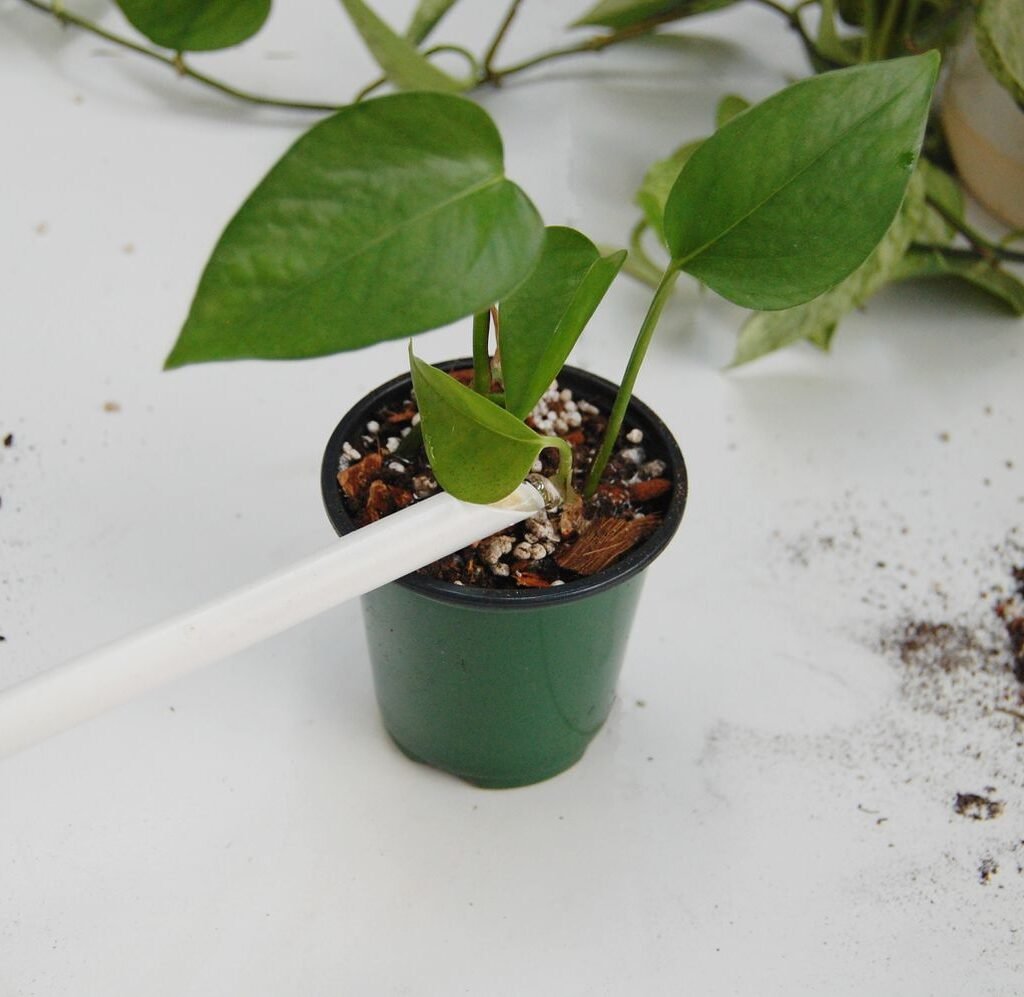
- Plant the cutting directly into a pot filled with fresh, well-draining soil.
- Water lightly, keeping the soil moist but not soggy.
- Covering the pot loosely with a clear plastic bag can increase humidity and speed up rooting.
Roots may take longer to appear in soil compared to water, but the plant doesn’t have to transition later—it’s already accustomed to soil.

Aftercare for New Pothos Cuttings
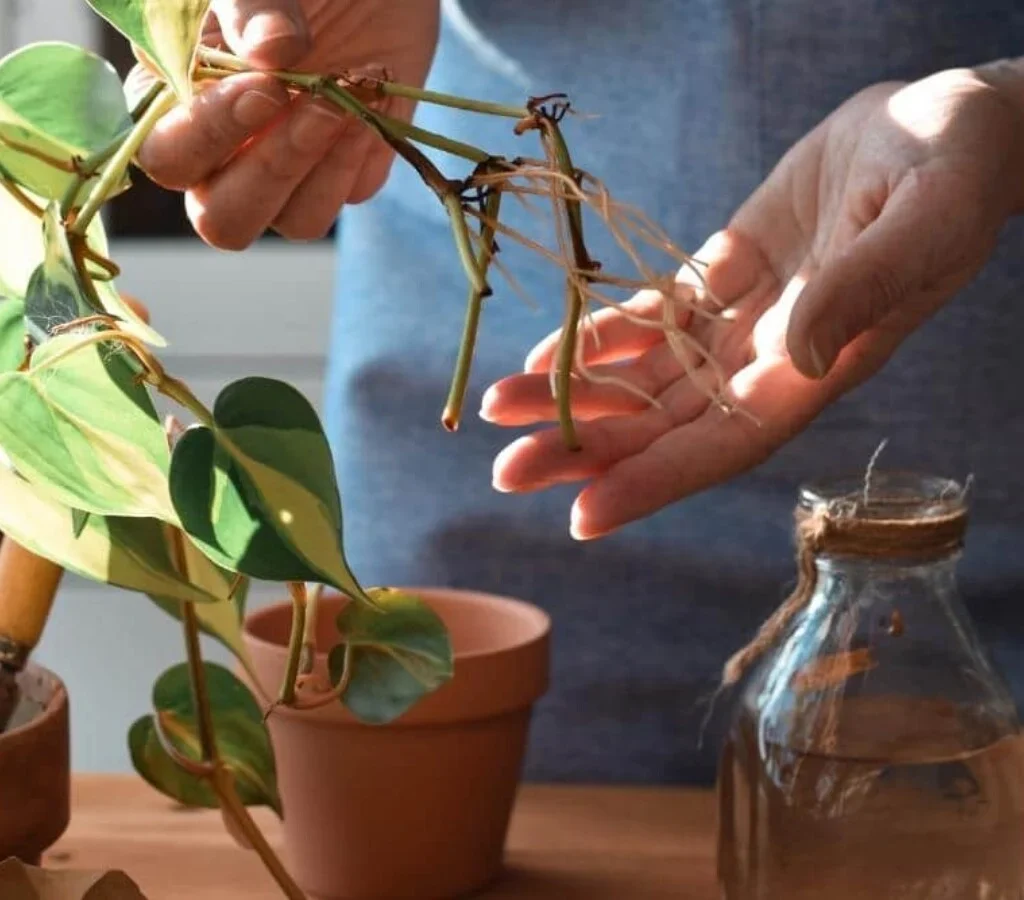
Once your cuttings develop roots or have been transferred to soil, proper aftercare is essential for long-term success.
1. Light
Place new plants in bright, indirect sunlight. Avoid harsh direct light, which can scorch delicate leaves.
2. Watering
Keep the soil consistently moist but not waterlogged during the first few weeks. Once established, pothos can tolerate some drying out between waterings.
3. Humidity
Pothos adapt to average household humidity, but higher humidity encourages faster growth. You can mist occasionally or group plants together.
4. Feeding
Wait at least 4–6 weeks before fertilizing newly propagated pothos. Then, use a diluted, balanced houseplant fertilizer during the growing season.
5. Pruning and Training
To encourage bushier growth, pinch back long vines. You can also train pothos to climb moss poles or trellises for a dramatic effect.

Troubleshooting Common Problems
Even though pothos are forgiving, you may encounter issues during propagation. Here’s how to fix them:
- Yellowing leaves: Usually caused by too much water on the leaves or poor water quality. Remove affected leaves and replace water.
- No roots forming: Ensure at least one node is submerged. Move the jar to a brighter spot.
- Roots turning brown/mushy: Indicates rot. Cut back to healthy tissue and restart in fresh water.
- Cuttings wilting in soil: The soil may be too dry or compacted. Lightly water and ensure good aeration.
Creative Ways to Use Propagated Pothos

Propagating pothos doesn’t just create more plants—it opens up new design possibilities:
- Create a fuller pot: Plant multiple cuttings together for a bushier look.
- Grow in water long-term: Keep cuttings in decorative jars as a minimalist, soil-free display (just add occasional liquid fertilizer).
- Gift plants: Share rooted cuttings in small pots or jars with friends.
- Wall displays: Use propagated vines to train along walls or shelves for a natural, cascading effect.
- Mixed arrangements: Combine pothos with other water-propagated plants like philodendron or monstera for an eye-catching display.
Why Pothos Are Ideal for Beginners
Among all houseplants, pothos stand out as the ultimate starter plant for propagation because:
- They root quickly and reliably.
- They tolerate a wide range of conditions.
- They thrive in both water and soil.
- They require minimal aftercare.
This adaptability makes them perfect for experimenting with different propagation methods and building confidence in plant care.
Conclusion
Propagating pothos is one of the easiest and most satisfying ways to grow your plant collection. With just a few simple steps—snipping a healthy cutting, placing it in water or soil, and providing a little aftercare—you can turn one plant into many.
Whether you keep your cuttings in stylish jars of water, pot them to create fuller plants, or gift them to others, propagation is a rewarding practice that deepens your connection to your plants. Pothos are not only resilient but also generous—ready to multiply and flourish with even the simplest care.

So next time you notice your pothos trailing across your bookshelf or window, grab a pair of scissors. With a quick snip, you’ll have the start of a brand-new plant, and the joy of watching life grow right before your eyes.

Leave A Comment